

Empowering Rohingya Youth Through Education and Leadership
Empowering Rohingya Youth Through Education and Leadership

The project in brief
The project is implemented by the Rohingya Youth Union (RYU) in the Cox’s Bazar refugee camps, Bangladesh. The project started in August 2025 and is ongoing.
The Rohingya Youth Union (RYU) empowers displaced youth in the Cox’s Bazar refugee camps through education, leadership training, and peacebuilding initiatives. By fostering skills, confidence, and community engagement, RYU enables young refugees to become agents of change and advocates for their rights. The initiative promotes inclusion, resilience, and sustainable development, aligning with the Global Compact on Refugees’ goals of enhancing self-reliance and strengthening community-led solutions.
The project aims to empower Rohingya youth with the knowledge, skills, and leadership capacity needed to contribute positively to their community and future. It seeks to:
- Enhance access to quality informal education and life skills training.
- Foster youth leadership, peacebuilding, and civic engagement.
- Promote social cohesion and gender equality within refugee communities.
- Strengthen self-reliance and resilience among displaced youth.
- Amplify refugee voices in decision-making processes at local and global levels.
Main activities of the Good Practice
The Rohingya Youth Union (RYU) implements a series of community-driven activities designed to empower displaced youth and strengthen resilience within the refugee camps of Cox’s Bazar, Bangladesh. The initiative operates through three core pillars: education, leadership development, and peacebuilding.
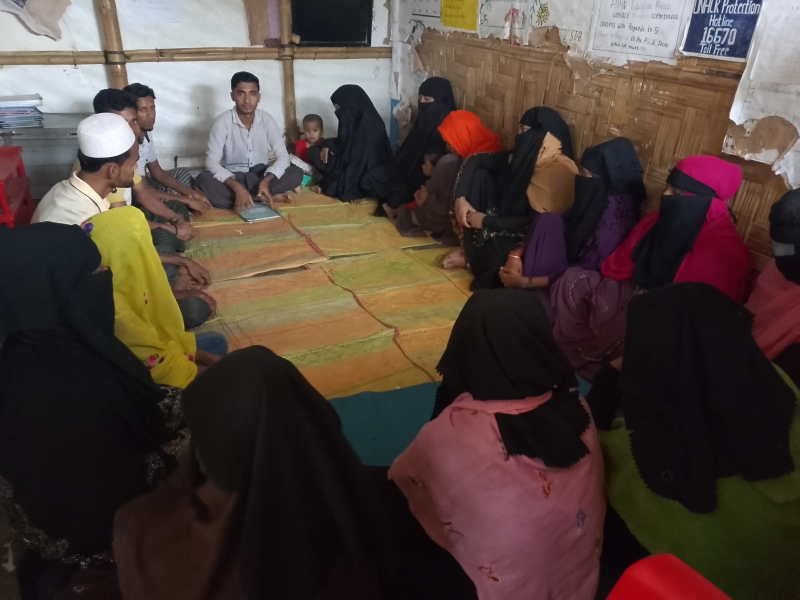
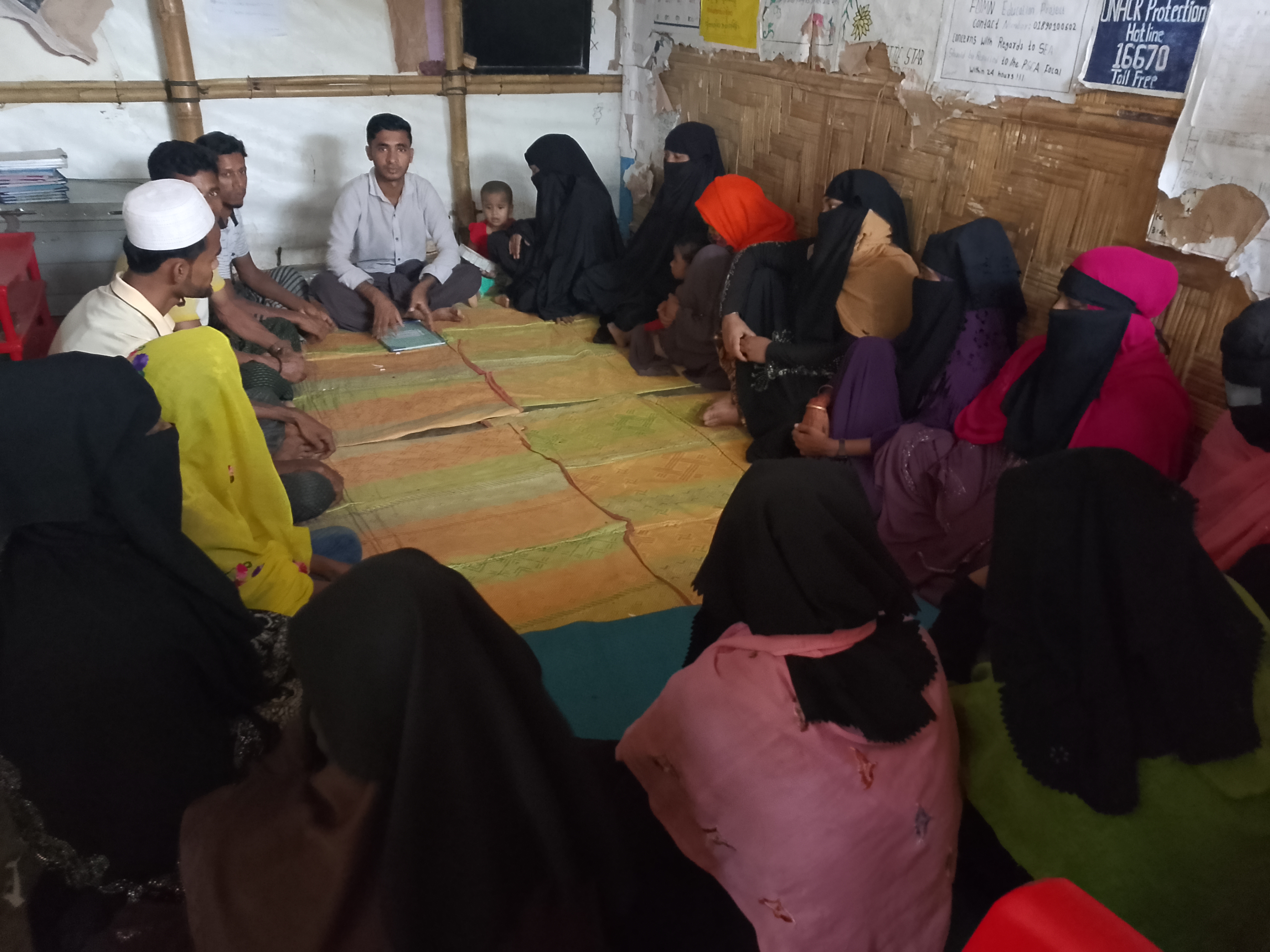
Under the education pillar, RYU organizes informal learning sessions focused on English, basic literacy, digital literacy, and life skills. These sessions help bridge learning gaps and prepare youth for future opportunities, both within and beyond the camp context.
The leadership development pillar provides workshops and mentorship programs on communication, teamwork, problem-solving, and project management. Youth participants are trained to identify community challenges and design small-scale initiatives addressing issues such as gender equality, youth engagement, and mental health awareness.
Through the peacebuilding and advocacy pillar, RYU promotes dialogue, tolerance, and collaboration among Rohingya and host community youth. The organization conducts community discussions, cultural exchange events, and storytelling projects to counter misinformation and foster social harmony.
RYU also amplifies refugee voices by connecting young leaders with regional and global platforms, enabling them to share their experiences and advocate for their community’s rights and dignity.
All activities are led by trained Rohingya youth volunteers, ensuring that the initiative remains community-owned, culturally sensitive, and sustainable. Despite resource limitations, the program continues to expand through partnerships, volunteer commitment, and a shared vision of empowering youth to lead peaceful and self-reliant lives in displacement.
Elements which helped facilitate the implementation of the good practice
Several key elements facilitated the implementation of this good practice:
- Community Engagement: Strong collaboration with local Rohingya youth, volunteers, and community leaders ensured trust, participation, and ownership.
- Partnership Support: Technical and moral support from partner organizations such as Same Skies and youth networks helped strengthen organizational capacity and visibility.
- Humanitarian Environment: The operational space provided by the Government of Bangladesh and humanitarian agencies in Cox’s Bazar enabled youth-focused initiatives.
- Volunteerism and Local Leadership: The commitment of refugee volunteers and youth leaders made project delivery sustainable despite limited funding.
Partners involved
- Sam Skies
What challenges were encountered in delivering the project and how were they overcome?
Challenges
The implementation of the RYU project faced several challenges:
- Limited Resources: Scarcity of funding and educational materials constrained the scale and frequency of activities.
- Restricted Mobility: Movement restrictions within the camps sometimes limited access to program sites for both volunteers and participants.
- Language and Cultural Barriers: Differences in language proficiency and cultural norms initially made communication and engagement challenging, particularly for young women and marginalized groups.
- Mental Health and Trauma: Many youth participants were dealing with trauma and psychosocial stress, which affected their motivation and ability to fully participate in programs.
- Sustainability of Volunteer Efforts: Ensuring consistent commitment from volunteers was challenging due to competing responsibilities and the precarious living conditions of refugees.
Despite these obstacles, the project adapted by leveraging local leadership, flexible program schedules, peer-to-peer support, and partnerships with humanitarian actors to continue delivering impactful activities.
How they were overcome
The challenges were addressed through a combination of community-led solutions and adaptive strategies:
- Resource Mobilization: RYU leveraged partnerships with organizations like Same Skies and local youth networks to access educational materials, funding, and technical support.
- Flexible Programming: Activities were scheduled at convenient times and locations within the camps to accommodate mobility restrictions and participants’ daily responsibilities.
- Peer Support and Mentorship: Trained youth volunteers provided guidance and encouragement, helping participants overcome language, cultural, and confidence barriers.
- Psychosocial Support Integration: Programs incorporated mental health awareness, trauma-informed approaches, and safe spaces to support participants’ emotional well-being.
- Volunteer Engagement and Capacity Building: Regular training, recognition, and leadership opportunities strengthened volunteer commitment and ensured continuity of project activities.
These measures allowed RYU to maintain participation, foster resilience, and achieve tangible outcomes despite challenging conditions.
Results of the Good Practice
- Increased Education Access: Hundreds of youth gained literacy, digital skills, and life skills, bridging learning gaps caused by displacement.
- Enhanced Leadership and Confidence: Participants developed leadership, communication, and problem-solving skills, enabling active community engagement.
- Empowered Women and Girls: Female youth gained confidence to participate in educational and community activities, promoting gender equality.
- Strengthened Social Cohesion: Dialogue and peacebuilding activities improved relationships among Rohingya youth and with host communities.
- Amplified Refugee Voices: Youth leaders are now able to advocate for their rights and needs at local and international platforms.
In what way does the good practice meet one or more of the four objectives of the Global Compact on Refugees?
Objective 1: Ease the pressures on host countries
The RYU project indirectly contributes to easing pressures on host communities in Cox’s Bazar by empowering Rohingya youth to engage positively within their communities. By providing education, skills training, and leadership development, the project reduces dependency on humanitarian services, encourages self-reliance, and promotes peaceful coexistence with host populations. Youth-led initiatives also support local social cohesion and community problem-solving, helping to alleviate potential social tensions and contributing to a more sustainable humanitarian environment.
Objective 2: Enhance refugee self-reliance
The RYU project directly advances refugee self-reliance by equipping Rohingya youth with education, vocational skills, and leadership capacities. Through informal learning, life skills training, and mentorship, participants gain the knowledge and confidence to take initiative, solve community challenges, and contribute meaningfully to camp life. By fostering entrepreneurship, peer-led initiatives, and advocacy skills, the project enables refugees to reduce dependency on aid, make informed decisions, and actively shape their own futures, promoting sustainable self-reliance in line with the Global Compact on Refugees.
Next steps
The project is planned to continue and expand. Next steps include:
- Scaling Education Programs: Expanding literacy, digital, and life skills training to reach more youth across additional camp sites.
- Strengthening Leadership Initiatives: Developing advanced mentorship programs and peer-led workshops to build a sustainable youth leadership pipeline.
- Expanding Peacebuilding Efforts: Increasing dialogue, cultural exchange, and community engagement activities to foster stronger social cohesion.
- Partnership and Resource Mobilization: Securing additional funding and collaborations with local and international organizations to sustain and enhance program impact.
- Monitoring and Evaluation: Implementing robust tracking to measure outcomes, learn lessons, and improve program effectiveness over time.
Are there areas in which support would be required to continue and/or scale up your good practice?
Yes, to continue and scale up the project, RYU requires support in the following areas:
- Funding and Resources: Additional financial support to expand educational programs, provide learning materials, and sustain volunteer activities.
- Capacity Building: Training for youth leaders and volunteers in advanced leadership, project management, and psychosocial support.
- Technical Assistance: Guidance in monitoring, evaluation, and impact measurement to strengthen program effectiveness.
- Partnerships and Networking: Connections with local, regional, and international organizations to enhance visibility, advocacy, and resource mobilization.
- Advocacy Support: Platforms to amplify refugee voices and engage with policymakers for long-term solutions.
Submitted by
Murshid Alam - Founder