

Cross-Border Collaboration on International Human Rights Litigation
Cross-Border Collaboration on International Human Rights Litigation

The project in brief
The project is implemented by Asylex in Switzerland and South Africa. The initial project implementation was from August 2022 to August 2025. The project is now in its second implementation phase, which focuses on follow up, potential advocacy initiatives, and full localization.
AsyLex promotes cross-border collaboration to enhance access to justice for refugees through international human rights litigation. On the basis of AsyLex’ expertise with UN treaty bodies and South African lawyers’ local knowledge, strategic cases are submitted collaboratively to secure legal protection for refugees at risk of refoulement. A jointly submitted pilot case to the UN Human Rights Committee secured interim measures protecting a stateless refugee from expulsion, demonstrating the transformative impact of cross-border legal collaboration.
This good practice demonstrates how cross-border collaboration between legal aid organizations can enhance access to justice for asylum seekers and refugees worldwide through the innovative use of human rights mechanisms. This approach is particularly relevant in contexts where states fail to uphold their human rights obligations, especially concerning the principle of non-refoulement. The initiative promotes awareness of, and engagement with, international human rights mechanisms by:
- building partnerships with local organizations in South Africa to develop context-specific solutions,
- sharing knowledge through workshops,
- setting international precedents by addressing human rights violations through strategic litigation, and
- empowering legal advisors to engage with international human rights mechanisms to protect and advocate for asylum seekers rights globally.
Main activities of the Good Practice
Phase 1: Understanding the Landscape
The project was initiated through an in-depth assessment of the accessibility of international human rights mechanisms in more than 50 country-contexts and over 80 exchanges with stakeholders all over the world. The research was captured in an interactive globe accessible to the general public on AsyLex’ website.
Phase 2: Project Initiation
From the research, South Africa emerged as a suitable country-context to kick off a collaboration, due to the accessibility of relevant mechanisms, local need for alternative protection mechanisms, and significant interest by local organizations in testing the effectiveness of international human rights mechanisms. Together with a local partner, we launched capacity-building workshops to strengthen practical know-how on the use of international human rights mechanisms. Planning was a joint effort, with objectives, timelines, and responsibilities shaped by both local experience and AsyLex’ procedural expertise.
Phase 3: Project Implementation
A pilot case was chosen through which the effectiveness of international human rights mechanisms in the refugee context in South Africa could be tested. The case was chosen in light of its strategic relevance in the South African context, and its suitability for the mechanisms addressed. The phase demonstrated both the applicability of the mechanisms to the South African context, as well as the project’s replicable nature combining AsyLex’ procedural expertise with grounded local knowledge.
Across all phases, the project emphasized mutual learning, collaboration, and practical application, creating a structured, scalable framework that empowers partners, strengthens local capacities, and advances access to justice for refugees sustainably.
Elements which helped facilitate the implementation of the good practice
The implementation of the good practice was enabled by several key elements:
- Mutually Beneficial Knowledge Exchanges: Collaboration with local partners combined AsyLex’ expertise in international human rights mechanisms with valuable insights drawn from local partners’ in-depth knowledge of the South African asylum context.
- Global Partnerships: Alliances with like-minded organizations beyond borders offered practical legal guidance on complex procedures, strengthened the legitimacy of joint efforts, and opened access to broader networks, ensuring smooth and sustainable coordination.
- Collaborative Case Assessment and Strategic Litigation: Incoming cases are jointly evaluated, with one strategic case selected for collaborative drafting and submission to the UN Human Rights Committee. The pilot case involved a stateless individual denied proper asylum and inclusion in refugee status despite legal entitlement. The registration of the case and the granting of interim measures represent a milestone, demonstrating the practical impact of international litigation and validating the approach in the South African context.
- Sustainable funding: Support by a project funding partner who took a long-term view, sharing our focus on capacity building, developing a pilot case, and facilitating learning from other legal advisors, rather than insisting on numerical indicators or measurable impact, was essential for the project. This was especially valuable in a context where quantitative metrics are hard to capture, allowing us to focus on lasting capacity and innovation instead of short-term impact.
These elements combined created an enabling environment that combined local insight with expertise in navigating international human rights mechanisms, establishing a scalable and replicable model to advance access to justice for refugees globally.
Partners involved
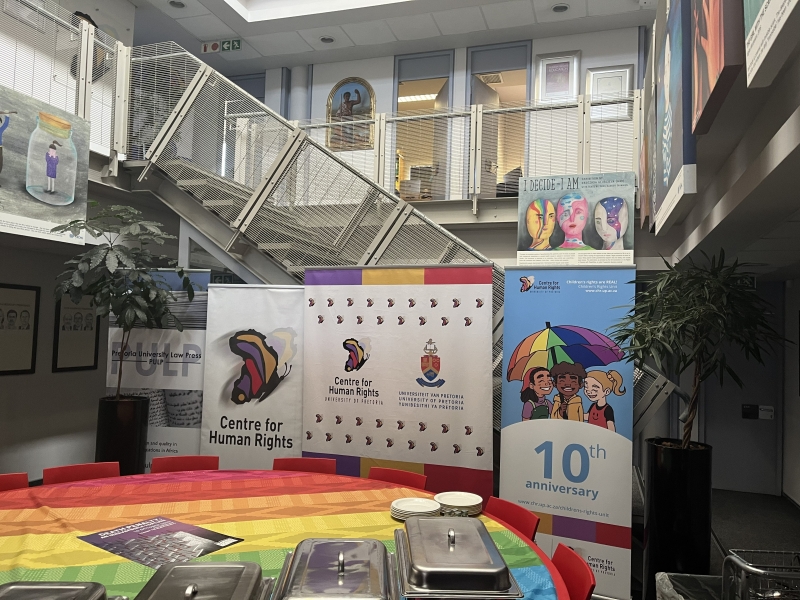
- Local partners in South Africa

What challenges were encountered in delivering the project and how were they overcome?
Challenges
Being based on cross-border collaboration, the project naturally presented challenges such as building trust and strong working relationships with partners in different regions, which required significant personal and logistical resources. Understanding the local legal and political context demanded continuous learning and adaptation. Clear communication was needed to ensure expectations were aligned and the partners’ respective expertise could be used effectively.
How they were overcome
The challenges were addressed through continued communication and ongoing relationship and trust-building with partners across borders. Site visits helped deepen understanding of the local context and facilitated stronger collaboration and mutual trust.
Results of the Good Practice
- Protection: The successful submission of the pilot case resulted in interim measures protecting the concerned individual from expulsion.
- Capacity building: Local legal advisors were trained to utilize international human rights mechanisms sustainably.
- Mutual learning: Both partners were able to expand their knowledge and skillset on legal protection for refugees.
- Strategic impact: The pilot case will serve as a basis for advocacy efforts and legal precedent setting with the aim of tackling structural issues.
- Scalable collaboration model: The structured approach and continuous integration of new learnings allowed for the development of a replicable model for cross-border collaboration on refugee protection.
In what way does the good practice meet one or more of the four objectives of the Global Compact on Refugees?
Objective 1: Ease the pressures on host countries
By providing refugees with immediate legal guidance and information about their rights, we reduce confusion and reliance on overstretched local services.
Objective 2: Enhance refugee self-reliance
Refugees can access up-to-date, multilingual legal information through the Rights in Exile (RiE) Platform, empowering them to make informed decisions, navigate emergencies safely, and take proactive steps independently. RiE not only includes refugee-specific information regarding various countries, but also provides access to local legal representatives, enabling refugees to reach support directly when needed.
Objective 3: Expand access to third-country solutions
We connect asylum seekers with partner organizations abroad and provide guidance on legal pathways in other countries, enabling refugees to explore safe and suitable alternatives beyond the host country.
Next steps
The project is designed as a long-term initiative beyond 2025. Based on lessons from the pilot phase, local organizations may establish a locally-led human rights litigation project using the expertise obtained in the pilot phase. Sustainability is ensured through ongoing learning exchanges, training, capacity building, and community outreach. Moreover, South Africa’s implementation of treaty body recommendations will be monitored closely, and potential advocacy efforts are planned in case of non-compliance.
Lessons learned throughout the collaboration will further inform similar projects in other countries, fostering a global legal community specialized in international human rights litigation and advancing access to justice for asylum seekers collaboratively. The wide distribution of the learnings is facilitated through the Rights in Exile Platform, a website hosted by AsyLex that connects refugees and legal advisors to legal information, representation, and expertise.
Are there areas in which support would be required to continue and/or scale up your good practice?
- Dissemination of good practice: Support is needed to share and promote our model more widely, including through support for the Rights in Exile Platform hosted by AsyLex. The platform provides refugees with direct access to country-specific legal information and contact details for local legal representatives, empowering them to seek help independently, and connects legal advisories all over the world.
- Technical assistance: Technical assistance is required to enhance accessibility of learnings and knowledge, amongst other through the development of localized chatbots through which asylum seekers may find low-threshold information and assistance.
- Financial support: Sustainable funding is essential to strengthen strategic partnerships, train local legal actors in international human rights litigation, and sustain upscaling of the project.
Targeted support in these areas will allow AsyLex to scale its impact and strengthen access to justice for refugees worldwide.
Submitted by
Lena Schulthess, Head Legal Information & Advocacy, AsyLex - Switzerland