

Promoting workplace diversity, equity, and inclusion through implementing the Cultural Diversity Index Initative
Promoting workplace diversity, equity, and inclusion through implementing the Cultural Diversity Index Initative
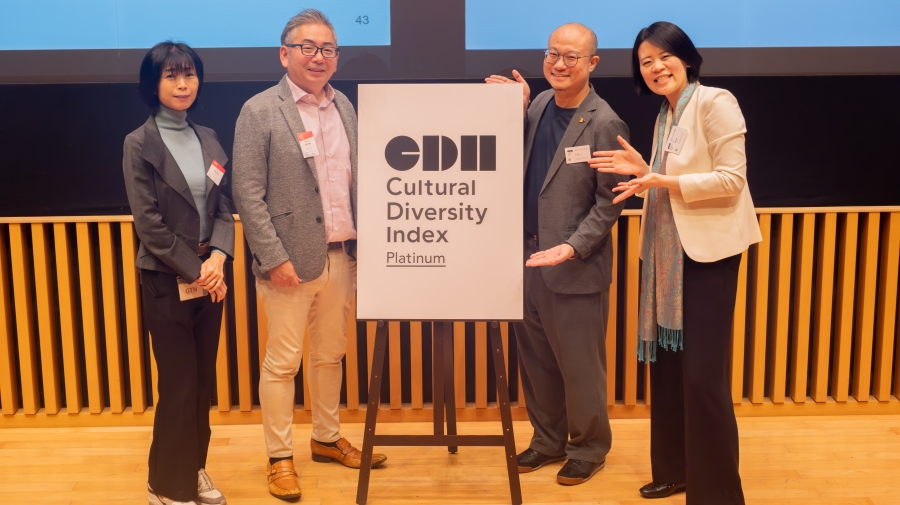
The project in brief
The project is implemented by the Inclusion Index Sub Working Group, Welcome Japan in Japan. It began in June 2024 and is currently ongoing.
We aim to encourage companies to create more inclusive workplaces through introducing the "Cultural Diversity Index" (CDI). The CDI focuses on various aspects such as language, cultural background, customs, and religion, promoting cultural diversity and equality in the workplaces in Japan so that anyone can to make the most of their abilities. This project calls on companies to commit to adopting the Cultural Diversity Index and aims to establish a system that evaluates contributions toward fostering multicultural workplaces. By doing so, we contribute to expanding employment opportunities for refugees.
Among certified organizations, 5 companies employ refugees, and 11 engage in refugee support activities.
We aim to reach out to at least 20 companies to adopt and implement the Cultural Diversity Index.
Main activities of the Good Practice
Living in Peace and Welcome Japan Inclusion Index Sub Working Group released Beta Version of the Index in 2023 and held a symposium.
Following updates to the index, we released the official version in June 2024 and began recruiting corporations to implement the index. By October of that year, 15 organizations had adopted the index. Additionally, five good practices were published across four areas: action policy, executive messages, education, and anti-discrimination.
To strengthen the Cultural Diversity Index initiative and expand the network, the Cultural Diversity Association was established as a specialized organization in March 2025.
In 2025, recruitment continued, and by October, 22 companies and organizations had adopted the index, exceeding the target. Additionally, four good practices were announced across three areas: development, education, and public relations/awareness.
Elements which helped facilitate the implementation of the good practice
- Research on challenges in the transition from education to employment for second-generation immigrants and refugees in Japan, conducted in collaboration with the University of Tokyo and the University of Tsukuba, examining perspectives from both students with immigrant and refugee backgrounds and companies.
- Utilization of networks with companies engaged in hiring individuals with immigrant and refugee backgrounds.
- Collaboration with non-profit organizations addressing refugee issues.
Partners involved
- Pro Bono Members Supporting Awareness of the Cultural Diversity Index
- Collaboration with the University of Tokyo
What challenges were encountered in delivering the project and how were they overcome?
Challenges
- Increase in public awareness of the Cultural Diversity Index
- Inclusion of people with migration/refugee backgrounds and Expansion of collaboration with organizations working to promote diversity and equality in workplaces
- Securing Activity Funding
- Increasing the Number of Active Members
How they were overcome
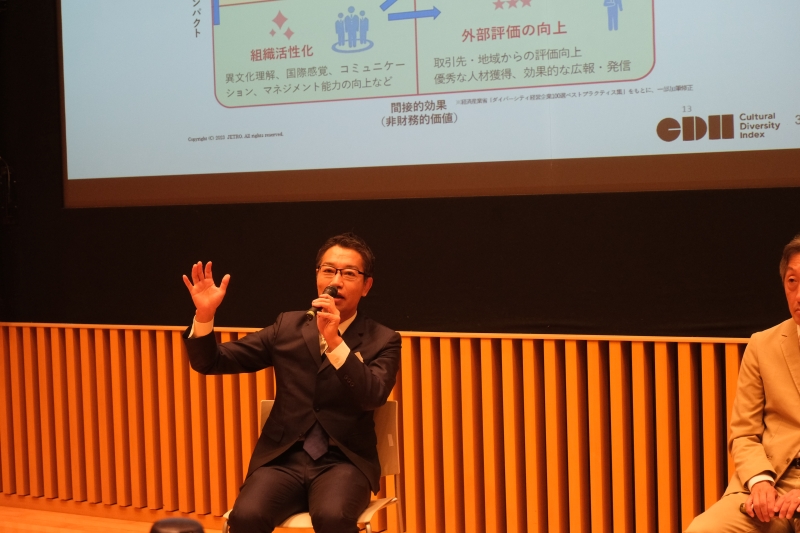
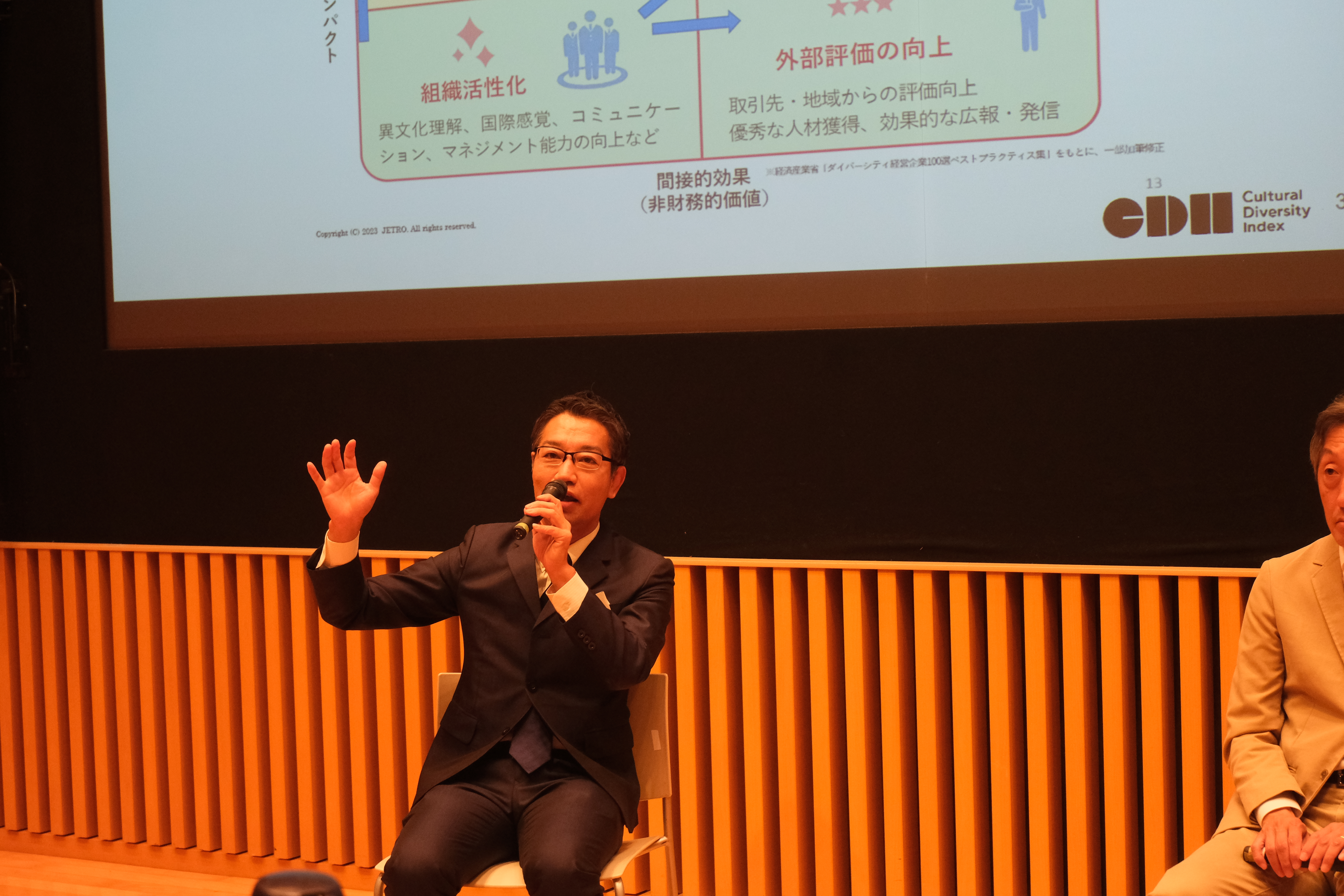
- Holding symposiums and briefing sessions about the CDI,
- Meetings and discussion with the companies that employ the people with refugee backgrounds,
- Networking through attending conferences and seminars about employment of immigrant workers and
Applying for donations from supporting corporations and research grants, - Recruiting members via the web.
Results of the Good Practice
15 organizations adopted the CDI in 2024, and 22 organizations in 2025. Among them, 5 organizations employ refugees in 2024 and 2025, and 10 support refugees in 2024, and 11 in 2025. All 15 organizations that adopted the system in 2024 achieved score improvements, with 5 organizations achieving rank improvements. Awards were given for exemplary cases serving as models for other organizations, recognized as good practices. Five cases were recognized in 2024, and four cases in 2025.An annual lecture and networking event is held for the adopting organizations.
In what way does the good practice meet one or more of the four objectives of the Global Compact on Refugees?
Objective 1: Ease the pressures on host countries
Supporting Refugee Self-Reliance: Contributing to increasing workplaces that are inclusive of people with migration backgrounds, including refugees
Next steps
- Increase in Adopting Organizations
- Impact Assessment on Organizations Following Adoption of the Cultural Diversity Index
- Increase in Organizations Improving Workplace Environments by Sharing Best Practices from Adopting
- Organizations External Information Dissemination (Including Presentations at International Conferences)
Are there areas in which support would be required to continue and/or scale up your good practice?
- Securing necessary funds for research and development.
- Expanding awareness through collaboration with already-registered corporations.
- Increasing registered corporations through partnerships with business groups, academia, and NGOs.