

Refugee Parliament - Flüchtlingsparlament
Refugee Parliament - Flüchtlingsparlament
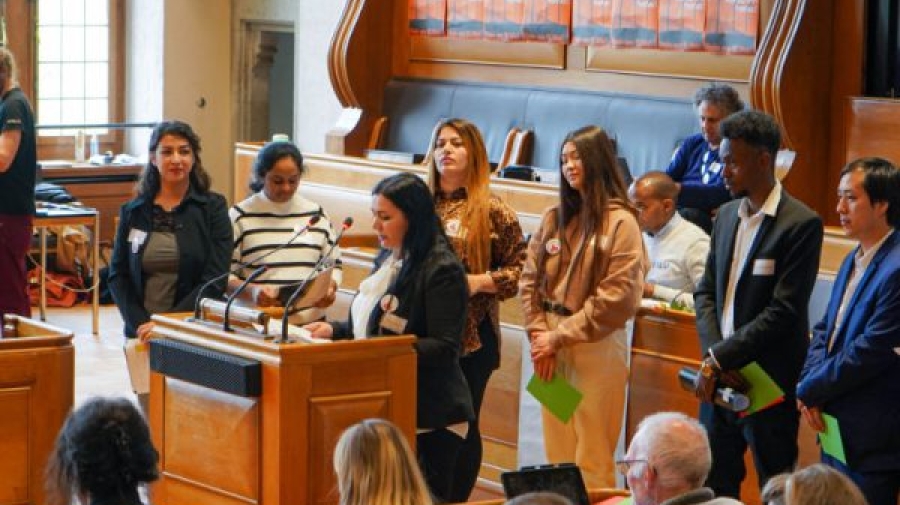
The project in brief
The project is implemented by the National Coalition Building Institute (NCBI) in Switzerland. It began in September 2020 and is currently ongoing.
The Refugee Parliament in Switzerland empowers refugees to have a political voice and actively participate in decisions that affect their lives. Established in 2021, it provides a platform for dialogue, representation, and advocacy, ensuring that refugees are included in policy discussions. By promoting inclusion, awareness, and engagement, the project strengthens democratic participation and helps overcome the systemic barriers that often prevent refugees from being heard in society.
- Empower refugees by giving them a formal platform to express their views and political concerns.
- Ensure political participation by including refugees in discussions and decisions that affect their lives.
- Promote representation so that refugee perspectives are more adequately considered in policymaking and public debates.
- Raise awareness about the challenges and needs of refugees within Swiss society.
- Foster inclusion and equality, helping to overcome systemic barriers and discrimination.
- It seeks to achieve meaningful participation, social integration, and a stronger voice for refugees in the political process.
"True democracy only exists when everyone has a voice, is heard, and can participate. That's why I'm committed to making sure the voices of refugees are heard."Mahtab Aziztaemeh
Main activities of the Good Practice
Elements which helped facilitate the implementation of the good practice
- Legal and policy support – Switzerland’s commitment to democratic participation and inclusion created a framework that allows refugees to engage in political processes.
- Dedicated funding – Financial support from government bodies and civil society organizations enabled the organization of sessions, workshops, and administrative logistics.
- Civil society partnerships – Collaboration with NGOs, migrant support organizations, and local authorities helped with outreach, facilitation, and advocacy.
- Existing participatory models – Experiences from the Women’s Session, Youth Session, and Migrant Session in Switzerland provided tested structures for organizing inclusive assemblies.
- Community engagement – Active involvement of refugees in planning and decision-making ensured relevance, accessibility, and ownership of the process.
- Trained facilitators and staff – Skilled moderators and coordinators as well as experiences with existing projects helped ensure discussions were structured, inclusive, and productive.
Partners involved
- UNHCR Switzerland and Liechtenstein: Provides advocacy and support for refugee rights and integration.
- Swiss Refugee Council (SFH): Offers expertise and resources related to refugee issues.
- Swiss Red Cross (SRK)
- Eritrean Media Association: Contributes to outreach and representation within the Eritrean refugee community.
- Migrant support organizations including the Aargau Asylum Network, Mit Stimme, and Bildung für alle – jetzt! These groups assist with facilitation and community engagement.
What challenges were encountered in delivering the project and how were they overcome?
Challenges
- Language barriers - Participants came from diverse linguistic backgrounds, making translation and mutual understanding essential but resource-intensive.
- Legal and political limitations - As refugees do not have full political rights in Switzerland, ensuring that their recommendations are taken seriously by authorities required ongoing advocacy and dialogue.
- Limited resources - Securing sustainable funding for coordination, interpretation, and participant support was a continuous challenge.
- Accessibility and inclusion - Ensuring participation of women, youth, and people with disabilities required additional logistical and organizational efforts.
- Trust building - Many refugees initially hesitated to engage due to past experiences with exclusion or lack of representation. Building confidence and motivation took time and consistent support.
- Coordination across cantons - Refugees are distributed across different regions of Switzerland, which made communication, organisation, and travel for in-person sessions complex.
How they were overcome
- Language support and interpretation - Multilingual facilitation and volunteer interpreters ensured that all participants could actively engage, regardless of their language skills.
- Advocacy and dialogue with authorities - Continuous communication with government representatives and institutions helped increase recognition of the Refugee Parliament as a legitimate consultative body.
- Diversified funding sources - Financial contributions from NGOs, foundations, and local partners helped stabilise resources and ensure continuity of activities.
- Inclusive design - Special attention was given to accessibility: venues were barrier-free, and support was provided for participants with disabilities or care responsibilities.
- Trust-building and empowerment - Regular workshops, open discussions, and mentorship helped create a safe and supportive space where refugees felt encouraged to share their experiences and ideas.
- Hybrid participation formats - Combining in-person and online meetings allowed broader participation from refugees living in different cantons and reduced travel barriers.
Results of the Good Practice
- Political empowerment: Refugees gained a platform to voice their concerns and influence policy decisions affecting their lives.
- Increased visibility: The challenges and perspectives of refugees are more widely recognized by authorities and the public.
- Skills development: Participants improved advocacy, communication, and leadership skills through workshops and parliamentary sessions.
- Social inclusion: Refugees built networks with peers, civil society, and policymakers, fostering a sense of belonging and community.
- Policy impact: Recommendations from the Refugee Parliament contributed to more informed and inclusive decision-making at local and national levels.
"As a member of the Refugee Parliament, I welcome the fact that refugees can raise their voices politically. Too often, people talk about us instead of with us. Who knows better than refugees how asylum policy works? No women's policy without women, no asylum policy without us."Shishai Haile, Mental Health Support Commission
In what way does the good practice meet one or more of the four objectives of the Global Compact on Refugees?
Objective 1: Ease the pressures on host countries
- Supporting social and economic integration of refugees, which reduces dependency on state-provided assistance and public services.
- Facilitating access to employment, education, and social services, enabling refugees to become more self-reliant and active participants in the local economy.
- Strengthening local capacities through collaboration with local organizations and institutions, thereby distributing support efforts more efficiently.
- By empowering refugees and engaging local stakeholders, our project helps mitigate the immediate and long-term pressures on host communities.
Objective 2: Enhance refugee self-reliance
- Providing access to education, vocational training, and language courses, which equips refugees with the skills needed for independent living and employment.
- Facilitating pathways to employment and entrepreneurship, enabling refugees to generate their own income and reduce dependency on aid.
- Offering guidance and mentorship, which helps refugees navigate local systems, build social networks, and increase confidence in managing their daily lives.
- Through these measures, our project empowers refugees to become self-sufficient and actively participate in their host communities.
Next steps
- Regular sessions planned: Future assemblies are scheduled to maintain continuous refugee participation and engagement.
- Broader outreach: Efforts are underway to include more refugees from diverse backgrounds, regions, and age groups, with a focus on expanding representation in the French-speaking part of Switzerland. The project also seeks to engage in dialogue with representatives from all Swiss political parties.
- Strengthening impact: The project aims to deepen collaboration with policymakers to ensure refugee recommendations influence decisions more effectively, monitor and support Switzerland’s implementation of the Meaningful Participation Pledge, and establish official representation of refugees.
- Capacity building: Ongoing workshops and training will further empower participants in advocacy, leadership, and civic engagement.
- Sustainability: The project seeks stable funding and partnerships to ensure long-term operation and scalability across Switzerland.
Are there areas in which support would be required to continue and/or scale up your good practice?
- Funding and Resources: Securing stable financial support would allow us to expand our programs, hire additional staff, and invest in necessary tools or infrastructure.
- Capacity Building and Training: Guidance on best practices, staff training, and access to workshops or mentorship would strengthen our team’s skills and effectiveness.
- Networking and Partnerships: Support in building partnerships with other organizations, institutions, or stakeholders could help us reach a broader audience and exchange knowledge.
- Monitoring and Evaluation: Assistance with tools or expertise to measure impact would help us improve our practice and demonstrate its effectiveness to funders and partners.
- Awareness and Advocacy: Support in promoting our work through media, conferences, or policy channels could increase visibility and influence.
Submitted by
Peter Mozolevskyi, Coordinator of the Project Refugee Parliament (Flüchtlingsparlament).
Organisation: National Coalition Building Institute (NCBI) - Switzerland