

Resilient Cities
Resilient Cities
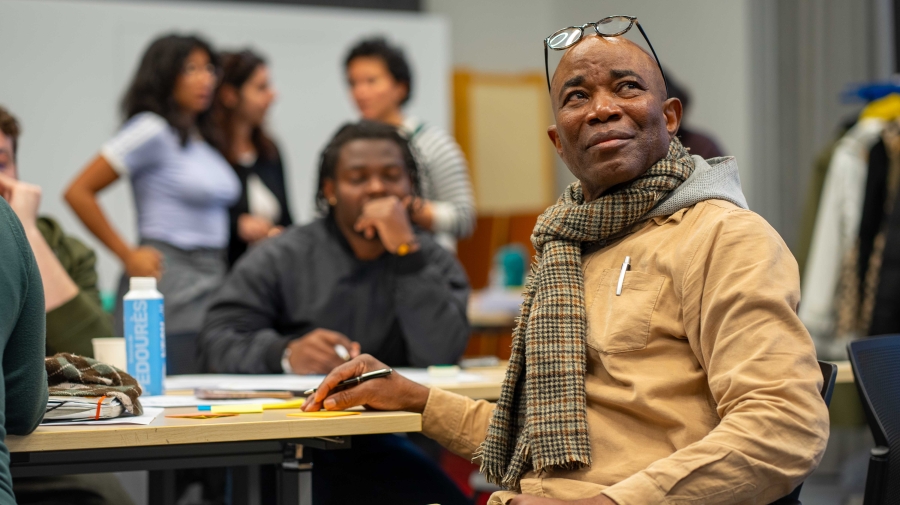
The project in brief
The project is implemented by PLACE Network in France. It started in June 2023, is ongoing, and will be completed in June 2026.
Resilient Cities strengthens inclusive local governance by connecting people with migration experience - including refugees and asylum seekers - civil society, and local authorities through civic and intercultural training, participatory Policy Labs, and co-created micro-experiments. Implemented in Lyon, Clermont-Ferrand, and Grenoble-Alpes Métropole, and now expanded to Rennes Ville et Métropole and Besançon, the project fosters mutual learning, institutional change, and transferable models for equitable civic participation, bridging the gap between public institutions and migrant communities.
The main goals of the project are to :
- Co-create local policies that reflect the lived experiences and needs of refugees, asylum seekers, and people with migration backgrounds.
- Build inclusive governance models that recognize migrants as civic actors and contributors to local democracy.
- Build leadership, confidence, and civic participation capacities among people with migration experience.
- Equip local authorities with tools for equitable, participatory, and responsive policy design.
- Develop transferable methods to foster inclusive participation in local governance.
- Foster sustained collaboration between municipalities, civil society, and migrant/refugee communities.
Main activities of the Good Practice
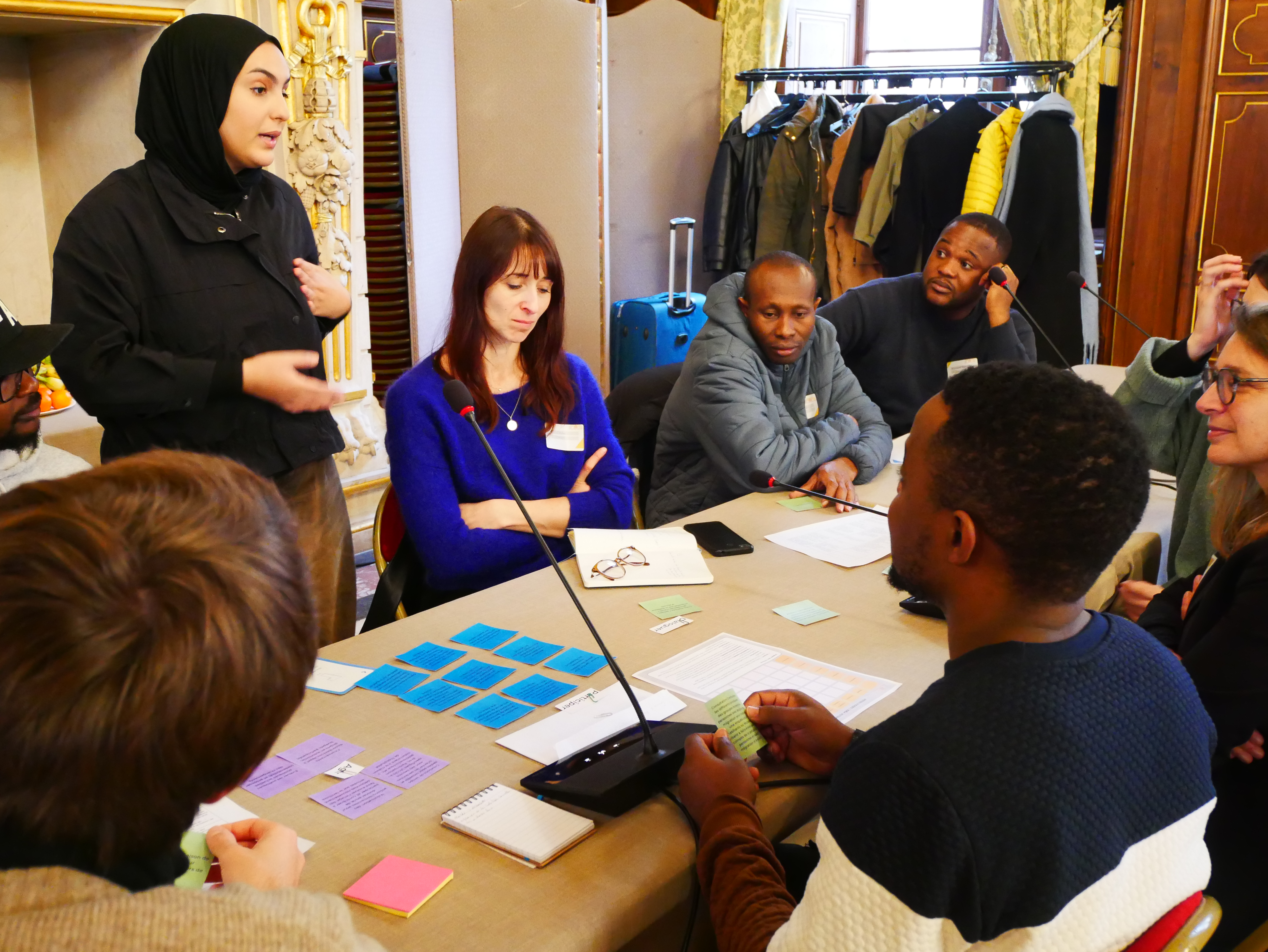
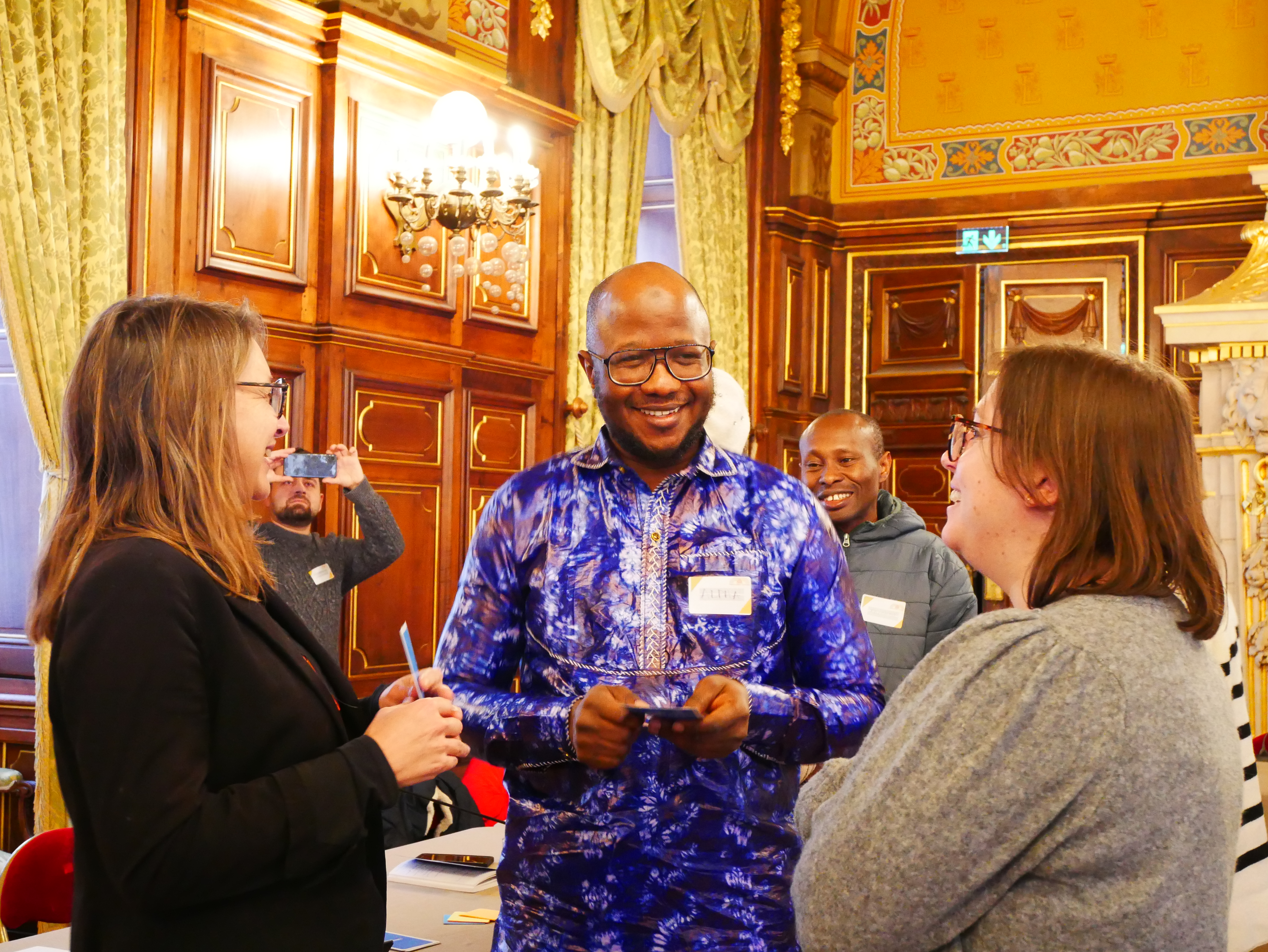
- Dual-track capacity-building — Training both local actors and residents with migration backgrounds. The residents with migration backgrounds strengthen civic knowledge, leadership, and advocacy skills. Local actors receive training on inclusive communication, unconscious bias, and building trustful environments.
- Policy Labs — Co-design sessions where participants collaboratively analyze barriers, tested practical solutions, and developed policy recommendations on topics such as access to services, language learning, civic engagement, and cultural participation.
- Micro-experiments — Small-scale pilot initiatives (e.g. multilingual service access, peer mentoring, inclusive events) tested in real institutional contexts. Each activity emphasizes co-creation, multilingual accessibility, and experiential learning. The results include improved mutual understanding, institutional awareness, and new models for participatory governance now informing local strategies.
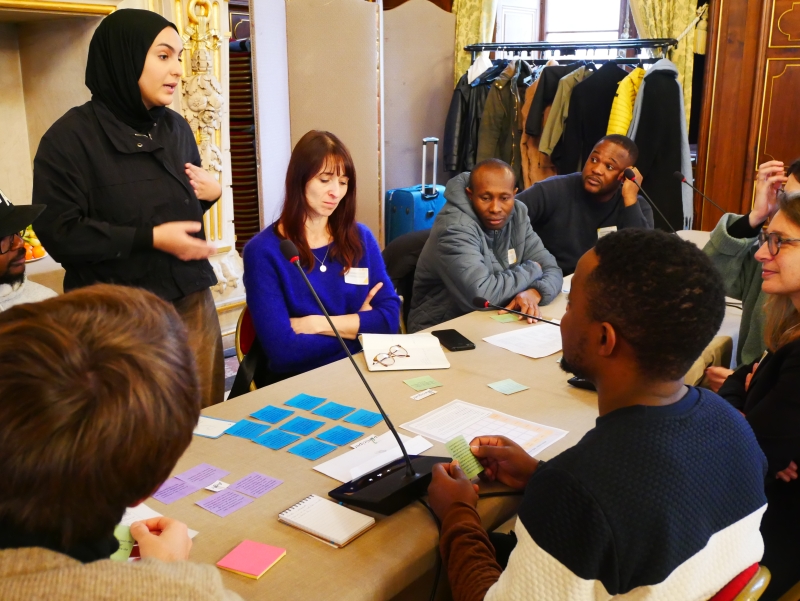
Elements which helped facilitate the implementation of the good practice
The implementation of the project was facilitated by strong partnerships with local municipalities. It benefited from the strong support of the Robert Bosch Stiftung and built on existing local structures such as the Contrats Territoriaux d’Accueil et d’Intégration (CTAI), participatory councils, and municipal frameworks that promote inclusive governance. Rather than building from scratch, Resilient Cities adapted to each local contexts and adding to the existing work of the cities.
Partners involved
What challenges were encountered in delivering the project and how were they overcome?
Challenges
The project encountered several challenges, including institutional rigidity and fragmented responsibilities across municipal departments, as well as limited resources and varying levels of readiness among partners. Building trust between institutions and migrant communities also required sustained engagement and time. Additional challenges included sustaining participation over time and ensuring that participatory spaces were fully inclusive, accessible, and engaging for all participants, regardless of language, background, or status.
How they were overcome
These challenges were addressed by appointing focal points within each municipality to ensure continuity and coordination, embedding activities within existing local strategies and the Contrats Territoriaux d’Accueil et d’Intégration (CTAI), and adapting facilitation methods to local contexts while ensuring multilingual accessibility and inclusive participation.
Results of the Good Practice
- In the first edition, over 90 participants in the first edition were empowered to co-create local policies reflecting the needs of refugees, asylum seekers, and people with migration backgrounds.
- Policy Labs produced actionable recommendations for the cities of Lyon and Clermont-Ferrand.
- 85% of participants with migration experience reported greater confidence to express themselves publicly.
- 88% of local actors found the training directly relevant to their work, and over 80% reported that it provided them with new tools to engage with communities.
- The project strengthened institutional awareness and fostered lasting collaboration between municipalities, civil society, and displaced populations for inclusive governance.
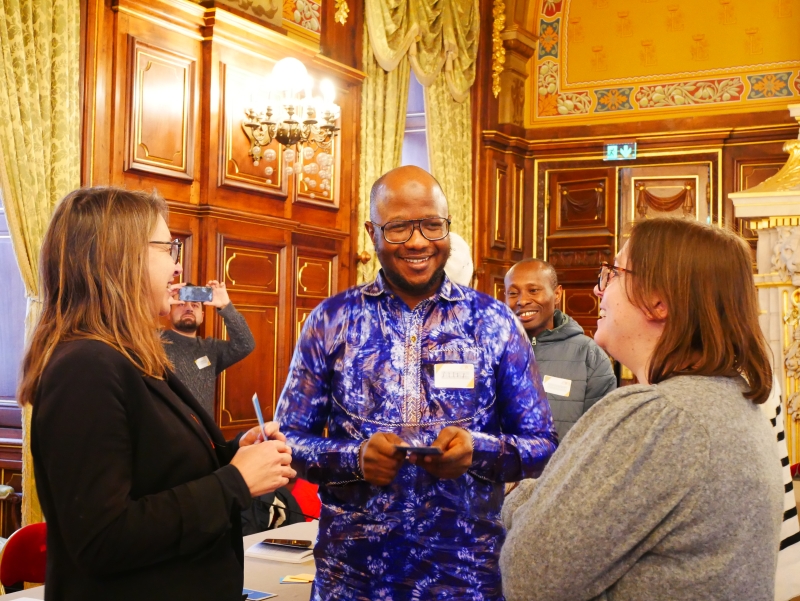
In what way does the good practice meet one or more of the four objectives of the Global Compact on Refugees?
Objective 2: Enhance refugee self-reliance
Enhances refugee and migrant self-reliance through leadership and civic capacity-building. The program leads to better feelings of inclusion and belonging.
Next steps
A second edition of the training is currently underway. A follow-up phase is being planned to consolidate results, support implementation of Policy Lab recommendations in the cities that went through the program, and expand the model to other municipalities in France and Europe.
Are there areas in which support would be required to continue and/or scale up your good practice?
Networking, funding opportunities, and partnerships with additional cities interested in replicating or adapting the Resilient Cities methodology.