

Beyond promises: enhancing lives through self-reliance
Beyond promises: enhancing lives through self-reliance
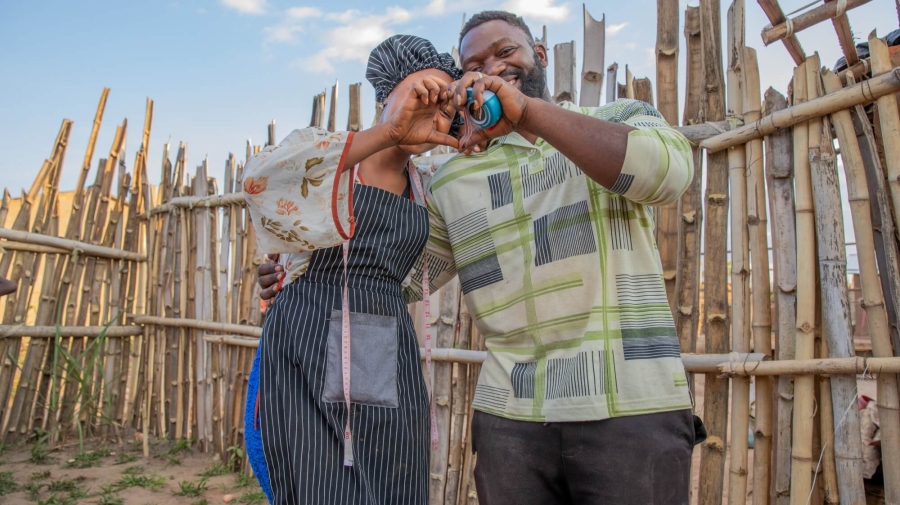
Congolese refugee couple Amani and Ivette arrived in Musenyi, Burundi, after fleeing conflict in North Kivu, in the Democratic Republic of the Congo (DRC), with their five children. The couple now live with their family at a refugee site in Musenyi. Ivette runs a tailoring shop where she trains both Burundians and Congolese in sewing skills, and Amani’s carpentry helps provide for their daily needs. They deeply appreciate the hospitality they've received.
In December 2025, the Global Refugee Forum (GRF) Progress Review – the second high-level officials’ meeting – will take place, bringing together representatives from across the international community to reflect on the progress made since the Global Refugee Forum 2023, identify and address the challenges faced, and look to the next Forum in 2027.
In advance of the GRF Progress Review 2025, regional and thematic stocktaking events are being held to help better inform discussions in December.
This article is the second in a series looking to demonstrate some of the tangible, life-saving impact the Global Compact on Refugees (GCR) is having, including through implementation of pledges. Following on from the article which explored pledges contributing towards the first GCR objective, this article looks to highlight some of the ways GCR stakeholders are achieving the second objective, to enhance refugee self-reliance.
Many pledges contribute to more than one objective, so this article will focus on pledges towards economic inclusion and social protection, access to higher education, and inclusion in national health systems and mental health and psychosocial support, all of which presented updates during the first and second formal preparatory meetings for the GRF Progress Review 2025.
Further information

Text and media 10
Timely and effective management of both physical and mental health issues enables a person to fully participate in society and achieve their potential. Inadequate access to healthcare and support can exclude people from employment, education, and social or cultural life, limiting self-reliance and reducing overall functioning.
Jamil, a Syrian refugee, in front of his Pastry and Bakery shop in Bishoftu town after the Ethiopian Government granted refugees access to healthcare, education, and business licenses through FAYDA ID system.
© UNHCR/Tiksa Negeri
Two multi-stakeholder pledges, National Health System Inclusion and Fostering Mental Health and Psychosocial Wellbeing, aim to ensure that all refugees and their host communities can sustainably access health and MHPSS services at affordable costs.
Improving outcomes for refugees and host community members
In 2023, the Government of Cameroon pledged to include refugees in their recently launched universal health coverage. So far, around 90,000 refugees have been included in this programme, representing 19 per cent of the total refugee population. In its first phase, the project supports access to maternal health care and priority communicable diseases such as malaria, tuberculosis and HIV. This marks a critical step toward equitable health access and greater inclusion of refugees in national development efforts.
As one of the leaders of the multi-stakeholder pledges, the Global Fund to Fight AIDS, Tuberculosis, and Malaria – an international financing and partnership organization – committed to expand the inclusion of refugees and other displaced people in funding requests, and to provide emergency funding to respond to their needs in times of crisis. Since 2023, the Global Fund, has disbursed USD 18.3 million in emergency funding for those displaced due to natural disasters and conflict, including amongst other support to Rohingya refugees in Bangladesh, Afghan refugees returning to Pakistan and displaced populations in Ethiopia. The Global Fund furthermore explicitly included forcibly displaced populations in its 2023-2028 strategy, aiming to maximize community leadership and people-centred integrated health services for populations who are not reached through national health systems, such as forcibly displaced people affected by HIV, TB and malaria.
Enhancing healthcare through community programmes
Prevention of health problems and early detection and referral are key to reducing pressures on healthcare services. The International Medical Corps, a non-governmental organization, committed to empower 100,000 refugees in the design, delivery and evaluation of healthcare programmes. Since making this pledge, they have established community health clubs in refugee camps to empower local leaders and foster sustainable health support networks. Refugee community health workers were trained to address health needs such as lifesaving first aid, maternal health care needs as well as information on how to prevent the spread of disease. They have designed this in partnership with NGOs and health authorities to ensure their programmes are aligned with national health strategies and that they can access additional resources and expertise to multiply the impact of the projects.
Meanwhile, Save the Children has been delivering on their pledge to expand access to mental health and psychosocial support for children and adolescents in forced displacement settings. Through a range of projects, this NGO provides safe spaces and activities that promote well-being and learning. One such programme, “I Support My Friend”, helps children to support one another by training them in child-to-child Psychological First Aid. This community driven approach is being used in Bangladesh, Indonesia, Mali and Niger, fostering self-reliance through knowledge sharing which can lead to long-term support for thousands of displaced children who have experienced traumatic situations and/or live in ongoing adversity. Another key initiative has been the development of an e-learning course on Foundations of MHPSS, designed for all staff and partners to equip them with a comprehensive understanding of MHPSS and its critical role in humanitarian and development contexts.
included in Cameroon's universal health coverage so far
in emergency funding from the Global Fund
to be involved in the design, delivery and evaluation of healthcare programmes from International Medical Corps
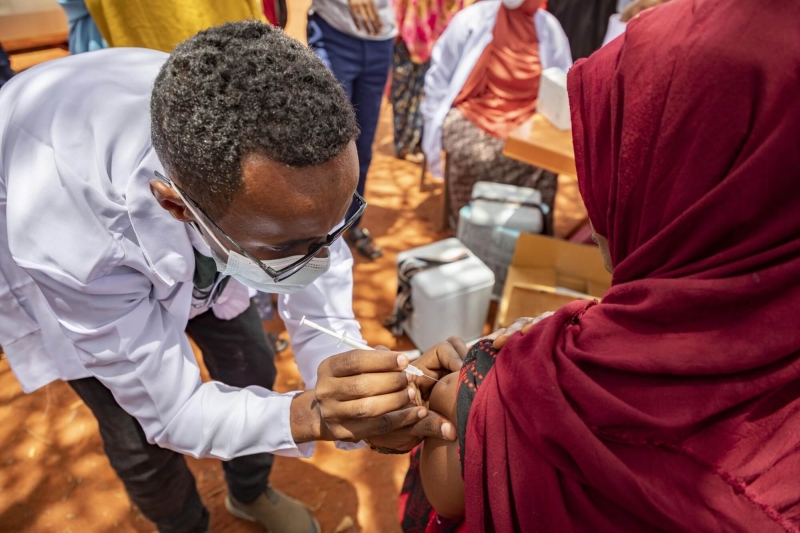
Doctors from the local medical clinic in Mirqaan, Ethiopia provide free measles and COVID-19 vaccinations to refugees. The site is being developed with support from volunteers from the local community. Plans are underway to continue providing support to communities hosting refugees, including partnerships to increase the capacity of schools and health centres.
© UNHCR/Diana Diaz
Text and media 3
Access to high quality education, including higher education, is key not only to enhancing self-reliance, but also to enabling forcibly displaced people to rebuild their lives and contribute meaningfully to their host communities. Where possible, it can also contribute to post conflict recovery in refugees’ countries of origins, furthering peace and stability for years to come. With less than seven percent of refugees currently enrolled in higher education globally, bold and coordinated action is needed to turn the tide.
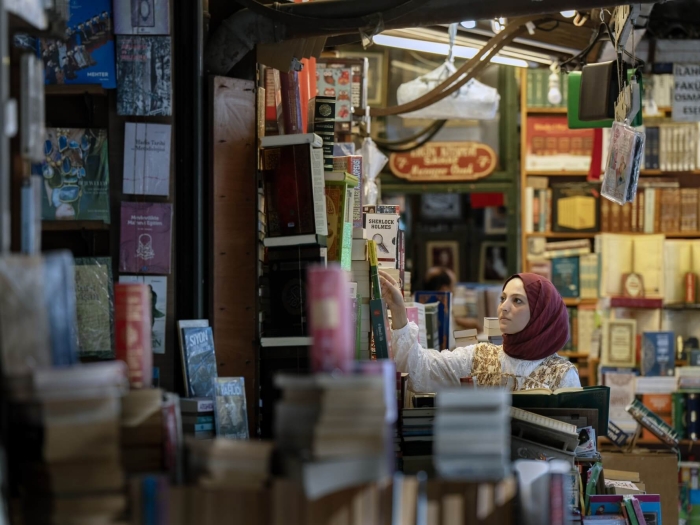
Joud is a second-year student of the Guidance and Psychological Counseling Department at Istanbul University Cerrahpaşa, Türkiye, and a DAFI scholar. “With the traces left by the war on us, I realized that educating myself in the rehabilitation field would be an important source of awareness both for me and for the people around me.”
© UNHCR/Ana Brigida
To address this, the Multi-stakeholder Pledge to Achieve 15% Refugee Enrolment in Higher Education by 2030 (15by30) is galvanizing collective efforts to ensure equitable and inclusive access to higher education for refugees and host community youth. Anchored in the Global Compact on Refugees, the pledge now includes over 110 entities, including governments, universities, refugee-led organizations, international financial institutions, and NGOs. These partners are advancing access through a range of interventions, from scholarships and recognition of prior learning to digital inclusion, tertiary connected learning, and language support.
“We’ve seen them excel”
Each One Take One (EOTO) is a flagship campaign under the 15by30 pledge and was presented at the second formal preparatory meeting for the Global Refugee Forum Progress Review by Professor Address Mauakowa Malata, Vice Chancellor of the Malawi University of Science and Technology. EOTO calls on higher education institutions globally to open spaces for at least one refugee student, creating a ripple effect of inclusion and solidarity.
The Malawi University of Science and Technology has fully embraced this call, integrating refugee inclusion into its institutional strategy for 2024–2030. Working with youth from Dzaleka Refugee Camp, the university has supported girls and young women to attend STEM camps and awarded scholarships for full degrees. Its holistic approach includes bridging and mentorship programmes, academic support, and peer networks to ensure refugee students not only enrol but thrive.
"I can assure you, we’ve seen them excel, they are brilliant," said Professor Malata. "They just need the space, the encouragement, and the support."
Meanwhile, Luiss Guido Carli University in Italy, together with Fondazione Mediterraneo, has provided scholarships to 17 refugee students, five of whom graduated last year. Several students have since progressed to master's degrees, underscoring the importance of sustained support across the academic journey and into employment.
Equitable access for refugees
The Jordan Higher Education Alliance, a network of Jordanian universities, has reduced refugee tuition fees from international levels to the same rates paid by national students, removing a significant financial barrier.
And in Türkiye, the Presidency for Turks Abroad and Related Communities, in collaboration with Türkiye Scholarships, has pledged to fund 1,000 university places for Syrian refugees by 2030. In 2024 alone, 932 Syrian students received scholarships, while 160,000 others benefited from social integration and academic enhancement initiatives through the International Student Academy Programme.
As these examples illustrate, pledges under 15by30 are not only expanding access but also reimagining systems to make inclusion sustainable, gender-responsive, and employment-oriented. The growing involvement of refugee-led networks, including the Tertiary Refugee Student Network (TRSN), is reinforcing the importance of centering displaced voices in shaping the future of education policy and programming. Looking ahead, the success of these pledges will be measured not just in numbers, but in how well they translate into meaningful learning outcomes, economic empowerment, and pathways to long-term solutions.
for girls provided by the Malawi University of Science and Technology
in Jordan have reduced tuition fees for refugees
provided to refugees by the Presidency for Turks Abroad and Related Communities and Türkiye Scholarships
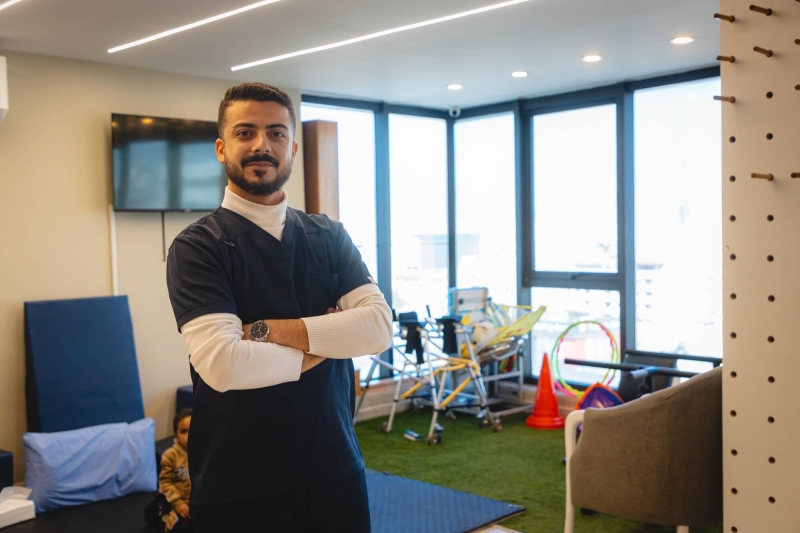
Qasim, a refugee living in Amman, Jordan, is a proud DAFI scholarship graduate who now works as a pediatric neurophysiotherapist. He dreams of one day rebuilding Syria and using his skills to contribute to his homeland.
© UNHCR
Text and media 11
Inclusion in national social protection systems and access to economic opportunities such as formal employment and entrepreneurship support both enable refugees and other forcibly displaced people to have greater agency over their lives and reduce reliance on aid, paving the way to durable solutions beneficial to both displaced people and their host communities.
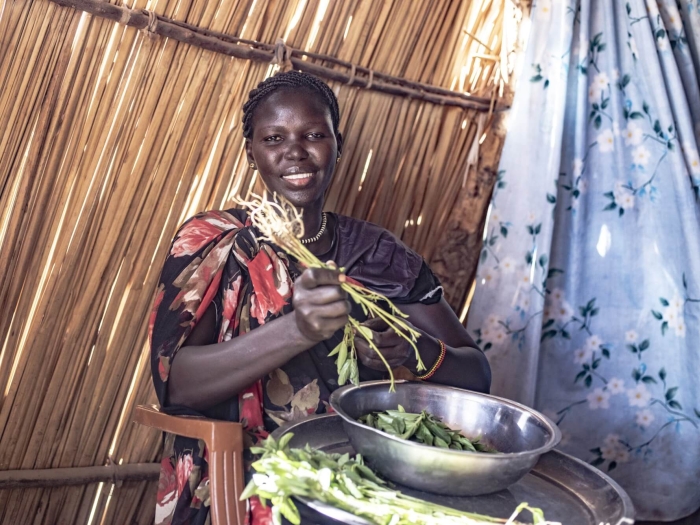
Angelina pictured at work in her restaurant in Bentiu, South Sudan. With the support of UNHCR, Angelina received a cash grant and a business start-up kit, which she put to good use. She employs three women in the restaurant, an apprentice, a waitress, and someone to run errands. Their lives have also changed for the better.
"I am so happy. Before, I could not feed my children, I was always worrying, but now I no longer worry. I know that every morning and evening there is something for my children to eat."
© UNHCR/Andrew McConnell
The Multi-stakeholder Pledge on Economic Inclusion and Social Protection is working to create such opportunities. Since its launch at the GRF 2023, the pledge has brought together stakeholders committed to building enabling environments to promote equal access to employment and advance inclusion in social protection systems and programmes, gather better data and evidence to measure inclusion and self-reliance, and introduce programmes which enhance employability and employment levels for forcibly displaced people and host community members.
Enhancing self-reliance, boosting economies
The Government of Mexico pledged to meet the needs of refugees and asylum seekers by strengthening coordination between the three levels of government through actions in the areas of health, education, identity documents, and employment. Their pledge aims to enable refugees to reach their full potential, contributing to Mexican society while enjoying improved self-reliance. Through a local integration programme, the Government are helping displaced people in the south of the country find employment opportunities in the centre and north. Last year, a labour mobility microsite, “Mexico Employs You” was launched to further assist connecting refugees with companies to find formal employment opportunities.
With assistance from other stakeholders, the project has so far helped over 50,000 refugees and asylum seekers find work in over 600 companies while providing support with relocation and integration. The Government of Japan recently announced that they will contribute to this work by supporting 5,000 refugees with socioeconomic integration. The Government of Mexico estimates that refugees in formal employment are generating over 275 million pesos (USD 14.66 million) a year in tax revenues, supporting the country’s economy and reducing reliance on aid.
In Africa, Inkomoko, an organization supporting entrepreneurship through microfinancing, pledged at the GRF 2023 to help 90,000 refugees and host community members by providing USD 150 million in direct investments to local, private sector enterprises. In 2024 alone, they identified over 30,000 small businesses. They have secured additional funding from The Audacious Project to expand their programme in Kenya, Ethiopia, and South Sudan, bringing economic opportunities to even more refugees and host communities.
Advancing inclusion in national systems
The Government of Kenya this year launched the Shirika Plan, a hugely ambitious, innovative project to fulfill the objectives of the Global Compact on Refugees by integrating refugees and asylum seekers with host communities. The Government are working with partners to transform the country’s refugee camps, which host hundreds of thousands of forcibly displaced people, into integrated settlements that will be home to refugees and host community members alike, with improved health, education, and economic opportunities. With support from the international community, including the Governments of Germany and Denmark, the LEGO Foundation and UNHCR, the enactment of this plan will bring greater socioeconomic opportunities to the areas where the camps are, reducing the reliance on aid and boosting the country’s economy.
Another part of the Plan covers a social protection pledge made by the Government to include refugees in government-led information management systems. As of May 2025, 138,056 households have been included in the Enhanced Single Registry, allowing for coordinated identification, targeting, enrolment, monitoring and delivery of assistance. Furthermore, recent reforms in legal identity systems are facilitating refugees’ participation in the National Social Security Fund’s Haba Haba pension arrangement.
Impact is maximized by accompanying mechanisms that enable refugees with professional skills and trades to exercise their rights under the Free Movement protocols, facilitating their engagement in formal and self-employment within the labour market.
The Shirika Plan is the embodiment of the Global Compact on Refugees, a radical reworking of responses, finding sustainable solutions beneficial to both refugees and host communities through a multi-stakeholder approach.
There are so many examples of how GCR stakeholders are enhancing refugee self-reliance, this article highlights just a small selection. Further examples of impactful pledges are being shared throughout the year at stocktaking events, preparatory meetings, and at the GRF Progress Review 2025 in December.
To support this work, please consider joining a multi-stakeholder pledge which can help identify areas in need of support through pledge matching.
for refugees in Mexico
in direct investments for refugee and host community businesses from Inkomoko
included in the Enhanced Single Registry in Kenya
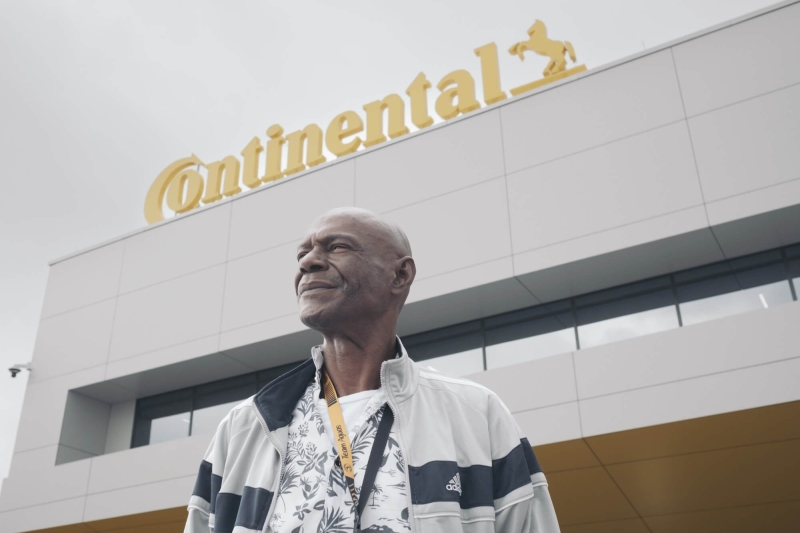


Refugees can rebuild their lives in Aguascalientes, Mexico through a relocation and integration programme. "In Aguascalientes, I feel safe, I feel free. My dream now is to have my job, buy my house here, retire in Mexico, and live here until death do us part."
© UNHCR/Jeoffrey Guillemard
Related content
