Exploring a common agenda for peace in the Middle East, North Africa and Asia
Exploring a common agenda for peace in the Middle East, North Africa and Asia

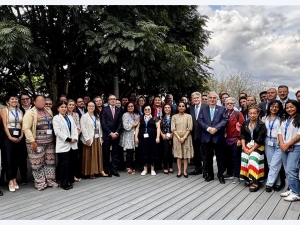
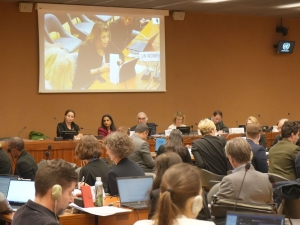
The fourth Regional Dialogue on Local Solutions Towards Peaceful Coexistence, convened on the margins of Geneva Peace Week, took place on Tuesday, 14 October 2025, bringing together a diverse group of stakeholders from across the Middle East and North Africa (MENA) and Asia. The Dialogue organised by UNHCR and University of Peace provided a platform to examine the role of forcibly displaced populations – including refugees and stateless people – in advancing peacebuilding and social cohesion at the local level.
Building on the outcomes of previous Dialogues held in Africa, the Americas, and Europe, this Dialogue focused on the unique challenges and opportunities in the MENA and Asia regions, which are marked by protracted displacement, complex emergencies, and evolving humanitarian needs. In these contexts, advancing objective four of the Global Compact on Refugees – supporting conditions in countries of origin for return in safety and dignity – is particularly urgent. Discussions explored how local peacebuilding efforts, diaspora engagement, and refugee-led initiatives can contribute to creating the social, economic, and political foundations necessary for voluntary, safe, and dignified return, while also strengthening resilience in host communities.
Participants highlighted the critical role of refugee-led organizations (RLOs) in fostering peaceful coexistence and resilience. Ms Noor Azizah, a Rohingya refugee and co-founder of the Rohingya Maìyafuìnor Collaborative Network (RMCN), shared her work across Malaysia, Indonesia, Thailand, and Bangladesh, providing mental health support, education, and advocacy for stateless women and girls. Jin Dawoud, founder of Peace Therapist in Türkiye, emphasized the importance of providing mental health support and promoting healing and resilience saying: "If we do not heal these psychological wounds, the war will continue – not on the ground, but inside people’s hearts."
Bahishta Nothani, a dentist and Afghan refugee living in Geneva, who is the President of the Afghanistan Women’s Rights Association (AWRA), spoke movingly about the plight of children. AWRA works both in Switzerland and at home defending the rights of Afghan women through refugee integration projects.
Thai Member of Parliament and Secretary-General of the Fair Party, Kannavee Suebseng, emphasized the importance of inclusive governance and the role of political leadership in advancing refugee protection and durable solutions, especially in eradicating statelessness. The 2024 Thai Cabinet resolution established an accelerated pathway to permanent residency and citizenship for nearly 500,000 stateless individuals.
Representing the Dharma Alliance, a global, independent, non-political, non-religious, and non-sectarian organisation, Abhishek Bhattacharya highlighted the role of faith-based actors through their long-standing contributions to peace and sustainability. Mr Michael Wiener from the Office of the UN High Commissioner for Human Rights, stated that religious leaders have a key role in countering hatred that incites to violence, discrimination or hostility in the name of religion or belief.
Refugees from Morocco, Egypt, and Central Asia shared how their refugee-driven initiatives are advancing psychosocial support, education, and legal empowerment – strengthening social cohesion, resolving conflict, and building inclusive, peaceful communities from the ground up. Their examples illustrate that displaced populations are not merely recipients of aid but active contributors to wellbeing in their host communities.
Ruvendrini Menikdiwela, UNHCR Assistant High Commissioner for Protection, commended the whole-of-society approach reflected in the Dialogue, stating: "Peace is the most durable of solutions, and refugee participation is key to the process."
The dominant theme emerging from the meeting is that peacebuilding is not a one-time intervention, but a continuous, inclusive, and locally anchored process – one that must be sustained through collective action and shared responsibility.
"Refugees are not passive recipients of peace – we are architects of it. We carry memory as resistance, and we turn survival into leadership." said Noor Azizah.


Related content