Local Solutions, Global Impact: The Chile Plan of Action and Cities of Solidarity in Latin America and the Caribbean
Local Solutions, Global Impact: The Chile Plan of Action and Cities of Solidarity in Latin America and the Caribbean
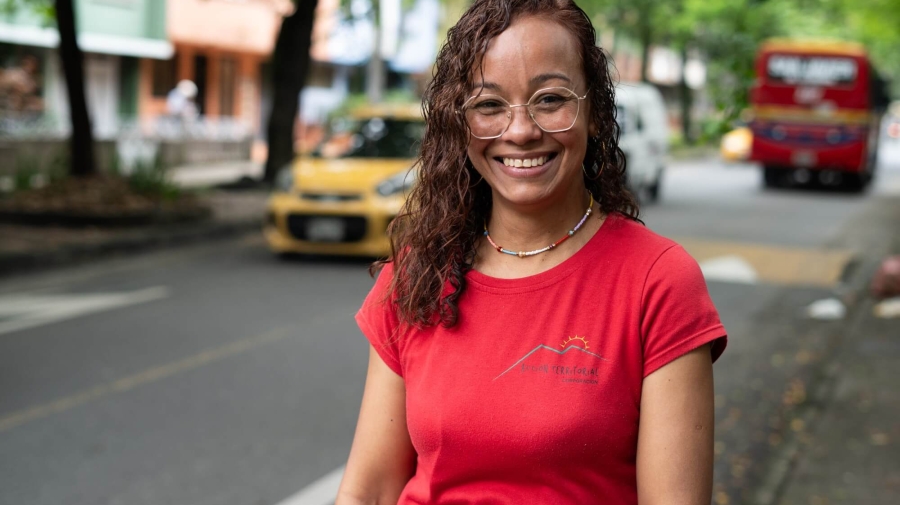
Lemnis Milagros Montanés is a Venezuelan community leader who settled 5 years ago in the Comuna 13 of Medellín. There she started her leadership and it became her life's purpose. Over the years she has trained her community in different topics, especially refugee, returnee and host mothers. Currently, she is a territorial promoter of Intégrate Medellín and works in the peripheral neighborhoods of La Honda and La Cruz.
World Cities Day on 31 October 2025 marked a milestone for solidarity in Latin America and the Caribbean. A regional initiative called Cities of Solidarity of the Americas is helping cities respond to displacement. These cities are not just places of arrival — they are spaces of transformation, where local leadership, innovation, and solidarity can converge to offer protection and inclusion. Today, 85 cities, provinces, and municipal associations across 12 countries are Cities of Solidarity.
In the Americas, where 21.9 million people are displaced or in need of international protection, cities are often the first responders. Urban areas absorb most newcomers, providing not only shelter but also pathways to education, employment, and community life. As the Chile Declaration notes, cities face challenges in hosting large-scale movements of refugees and migrants, but they also offer unmatched potential for integration.
The Cities of Solidarity initiative recognizes this potential. It fosters regional and national networks of municipalities that exchange good practices, coordinate responses, and advocate for inclusive policies. These cities are not just service providers; they are agents of change, shaping how societies welcome and integrate displaced populations. The initiative is now a cornerstone of the region’s strategy to promote inclusive local policies, strengthen protection systems, and build social cohesion.
Cities like Mexico City and Montevideo exemplify the initiative’s impact. Mexico City responded to a surge in asylum claims — representing more than 30% of the national total. It helped to move thousands of people from informal encampments to shelters, launched a 10-point agenda focused on gender equality and child protection, and created a Coordination for Human Mobility Office under the City’s Ministry of Interior. Montevideo, meanwhile, has embedded refugee protection into its local development strategy, prioritizing employment and entrepreneurship — especially for women — with a 60% success rate in formal job placement. The city also provides childcare services to support working mothers and ensures refugees and migrants’ participation in policy design and monitoring, demonstrating how local leadership can drive inclusive and sustainable solutions.
Other cities in the network, such as Medellín, Río de Janeiro, Guatemala City, and San José, are also implementing innovative practices. From inclusive housing policies to intercultural education programmes, these cities are demonstrating that local action is essential to global solutions.
In September 2024, Guatemala launched its National Network of Cities of Solidarity, joining other countries in formalizing municipal cooperation. Meanwhile, regional platforms like the Comprehensive Regional Protection and Solutions Framework (MIRPS) and the Mercociudades Network of Cities, are aligning efforts to support municipalities in their role as hosts and integrators.
Cities of Solidarity, initiated 20 years ago under the Mexico Plan of Action (2004), was revitalized in 2014 through the Brazil Plan of Action, and is currently supported through the Chile Declaration and Plan of Action 2024–2034. This plan, pledged at the Global Refugee Forum 2023 and adopted in December 2024, is now being implemented across the region. The Cities of Solidarity initiative supports local leadership to drive inclusive and durable solutions for refugees, displaced people, and stateless populations.
The Chile Declaration emphasizes the need for local leadership and calls for policies that benefit both refugees and vulnerable host communities. Cities of Solidarity embodies this vision by promoting inclusive governance, encouraging community participation, and supporting socioeconomic inclusion through education, employment, and housing initiatives. It also amplifies the voices of refugee-led organizations, civil society, and the private sector, supporting a multi-stakeholder system of response.
As the world faces unprecedented displacement, cities are stepping up, not just to respond, but to lead. As most refugees live in urban areas, the contribution of cities is crucial, and the Global Compact on Refugees recognizes the vital role they play, both in the Americas and globally. By promoting inclusive governance, amplifying the voices of refugee-led organizations and civil society, and supporting multi-stakeholder responses that benefit both displaced populations and host communities, Cities of Solidarity exemplifies the transformative power of municipalities. It demonstrates that when cities are supported, they can become inclusive spaces of protection, opportunity, and belonging for all.
Related content