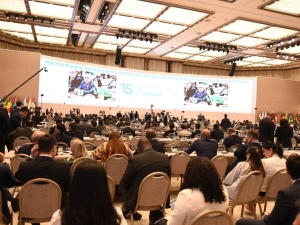
Together Holding the Torch: An International Dialogue on Leadership, Youth, and the Future
Together Holding the Torch: An International Dialogue on Leadership, Youth, and the Future
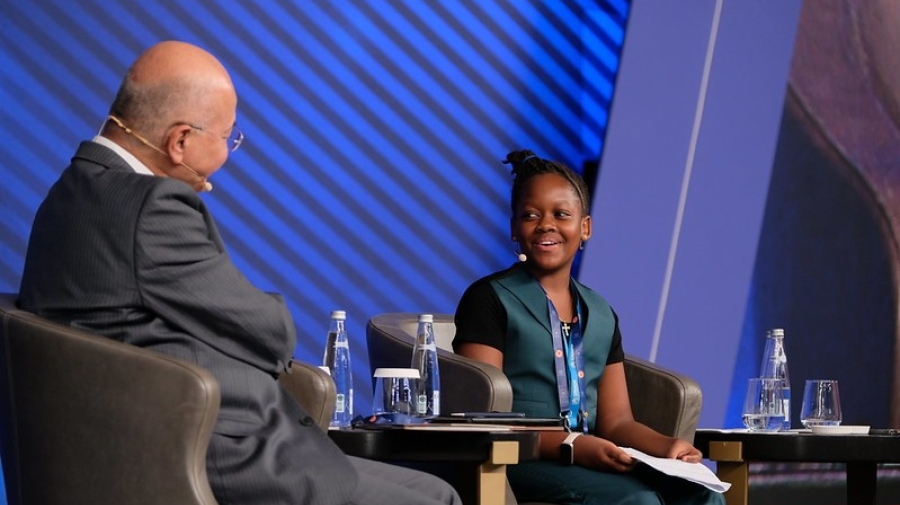
United Nations High Commissioner for Refugees, Barham Salih and author and environmental advocate, Georgina Magesa on stage at the 152nd Assembly of the Inter-Parliamentary Union in Istanbul
At the opening of the 152nd Assembly of the Inter Parliamentary Union (IPU) in Istanbul, in front of an audience of over1500 delegates, including more than 720 parliamentarians from 126 countries, Barham Salih, United Nations High Commissioner for Refugees, and Georgina Magesa, an eleven year old author and environmental advocate from Tanzania, discussed intergenerational dialogue.
It was an-important exchange held in front of lawmakers as this year marks the 75th anniversary of the 1951 Convention Relating to the Status of Refugees and the 65th anniversary of the 1961 Convention on the Reduction of Statelessness.
Mr. Salih emphasised the importance of leadership if international commitments are to have real impact. The role of parliamentarians, he said, is especially important as laws, budgets, and oversight determine whether international commitments are translated into national action and determine whether protection frameworks remain effective.
Drawing on his own experience of conflict and displacement, Mr. Salih reflected on the lasting effects of war on families and communities. He observed that regardless of context, displaced people share common aspirations for safety, dignity, and opportunity. Listening to younger voices, he reflected, ensure that policy discussions take longer term consequences of decisions into account. Mr. Salih emphasized how inclusive leadership means listening to perspectives that are often absent from formal decision making spaces, especially those of young people.

Ms. Magesa described her work as an environmental advocate, sharing her experience of climbing Mount Kilimanjaro at just nine years old to raise awareness of the link between climate action and children’s rights. She spoke powerfully about how children and those most vulnerable are often the first to feel the impact of decisions made in parliaments, particularly in the context of climate change and displacement. As she put it, “climate change does not stop at borders so solutions should not stop either.”
Mr. Salih took the opportunity to share UNHCR’s objective to reduce long term displacement over the coming decade, highlighting the role parliamentarians must play. Progress, he said, depends on sustained parliamentary engagement and cooperation across governments, institutions, and communities. He highlighted that refugees and displaced people bring skills and potential that can strengthen societies.
In closing, Ms. Magesa stressed that “hope is very powerful but hope alone is not enough”. She reminded the parliamentarians that the choices they make today will affect her generation’s future. She called on parliamentarians to invest in education so every child can take part in protecting our planet.