Cameroon’s whole-of-government approach to refugee inclusion: A national story of shared progress
Cameroon’s whole-of-government approach to refugee inclusion: A national story of shared progress
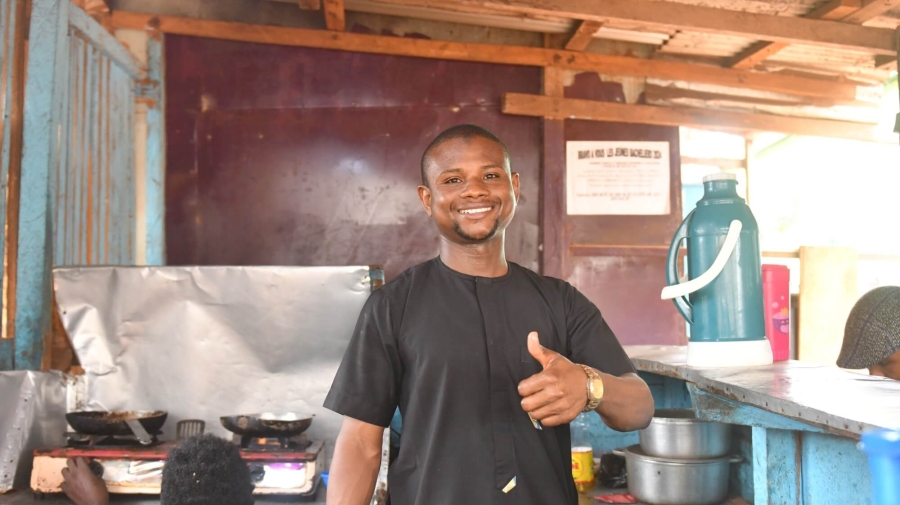
Amadou Haphizou, a refugee from the Central African Republic, stands in front of his cafe restaurant where he serves fried eggs and spaghetti, tea alongside many other dishes. After spending over 10 years in Cameroon, he got help from UNHCR through the DAFI scholarship enabling him to open this cafe restaurant.
In the heart of West Central Africa, Cameroon is shaping a new future, one with refugee inclusion, one that sets a regional example, and one that embraces a whole-of-government approach rooted in partnership, vision, and solidarity. Guided by the principles of the Global Compact on Refugees (GCR) and the pledges made by Cameroon at the Global Refugee Forums (GRF) in 2019 and 2023 to expand refugee access to social services, enhance self-reliance, and promote local integration, the Government is already weaving refugee response directly into the fabric of national development.
Anchored in its National Development Strategy 2030 (SND30), Cameroon is transforming its refugee policy from a humanitarian intervention into a long-term development agenda. This reflects a growing effort to support refugees in integrating more meaningfully into society, with increased opportunities to access services and contribute alongside host communities.
From pen to policy: How Cameroon swiftly embraced refugees in their policies
Soon after making their bold pledges at the second GRF, a significant milestone was achieved when the Ministry of Decentralization and Local Development (MINDDEVEL), in collaboration with UNHCR and in alignment with the President’s budgetary priorities, issued a defining Joint Circular Letter. This directive allowed regional and municipal authorities to officially include refugee needs in their development planning and budgeting, an unprecedented move that transformed national commitments into tangible local action.
Among the most ambitious initiatives launched as part of this approach is the PULCCA (Projet d'Urgence de Lutte Contre la Crise Alimentaire) Project, Cameroon’s emergency project to combat food crisis. Launched in early 2023, this World Bank and Government-funded effort channels over FCFA 60 billion (over USD 100 million) to reach more than 265,000 vulnerable people across six regions in Cameroon. It supports agricultural and livestock production, enhances nutrition, and strengthens community resilience, advancing both humanitarian and development goals.
Education as a pathway to inclusion
Determined to ensure that no child is left behind, the Government has set a clear goal: to bring refugee enrolment rates in primary and secondary schools in line with those of nationals, and to reach a 15 percent refugee enrolment in higher education by 2030. Progress is already visible. Through the Education Cannot Wait programme, running from 2022 to 2025, Cameroon has rehabilitated schools, trained teachers, and expanded access to safe learning environments and conditions. Moreover, over 47,000 refugee children in formal education and 6,400 children in non-formal education, are now enrolled in public schools across Cameroon. As of 2025, through the leadership role of the Cameroon’s Ministry of External Relations, alongside UNHCR, 152,000 Central African refugee children have been supported across all education levels.
Access to social services for a proper integration
Cameroon’s commitment to social inclusion extends beyond the classroom. The Ministry of Social Affairs, in collaboration with the wider Government, has supported over 14,000 forcibly displaced children through the issuance of birth certificates. Refugee children are even taking part in national life through the Children’s Parliament, where they speak directly to ministers and lawmakers on June 16th, African Children’s Day, demonstrating a powerful sign of recognition and meaningful participation. Through thorough assessments, other vulnerable refugees, including survivors of gender-based violence and victims of early marriage are being identified and supported through specialized mechanisms.
Universal health care: Life-saving inclusion
Healthcare, too, has become a cornerstone of the country’s refugee policy. As part of a nationally-coordinated strategy to strengthen refugee inclusion and through joint efforts across health, social affairs, and refugee management institutions, Cameroon is steadily integrating refugees into its Universal Health Coverage system. By May 2025, over 95,000 refugees had been registered in the national health database and provided QR-code-enabled access to subsidized healthcare. This integration has ensured life-saving treatment for diseases such as malaria, HIV, tuberculosis, and renal insufficiency, as well as critical maternal care, all provided free or at reduced cost.
Refugee documentation: Tangible inclusion
Recognizing that legal identity is key to participating in society, Cameroon has also expanded efforts to document its refugee population. Through joint action by relevant government ministries and regional authorities, identification campaigns in the North, Adamaoua, East, Littoral, and Centre regions have reached more than 30,000 individuals in 2025. As of May 2025, nearly 10,000 biometric refugee ID cards have been issued to refugees, with over 110,000 to be issued by 2027. These documents not only grant legal protection, but also open the door to employment, health, education, and financial services, laying the groundwork for greater social and economic participation.
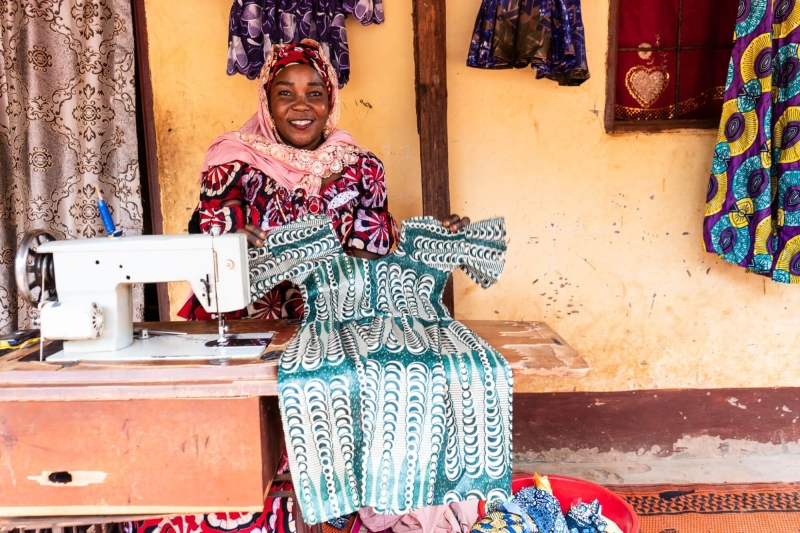
Former refugee Haouaou Halidou is established in Berbérati as a tailor. She benefited from training in sewing, learned the craft and also became a trainer, eventually purchasing a sewing machine with her earnings as a community worker. Upon her return in CAR she found herself starting over from scratch. She acquired a plot of land and, with help from a UNHCR project, built a house and began investing in property by building rental houses to secure her financial future. Her greatest concern is her children's future, as she hopes they will acquire skills to sustain themselves and the family as she ages. © UNHCR/Insa Wawa Diatta
Protecting refugees and the environment
Cameroon is integrating environmental sustainability into its broader national response to displacement. In and around the Minawao refugee camp, more than 56,000 trees have been planted since 2022, creating green spaces in schools and easing pressure on local ecosystems. Building on this momentum, the authorities scaled up their efforts in 2024 by distributing 100,000 plants to both refugees and host community members, strengthening ecological resilience and enhancing shared responsibility for the environment. Clean energy access is also growing, 25,000 households will receive sustainable cooking energy alternatives, supported by training programs on briquette production and use, to empower communities to take control and ownership of sustainable energy solutions.
Local Governments key role in refugee inclusion
Cameroon’s commitment to decentralization and promoting local development means refugee inclusion is now embedded in local governance. In March 2024, UNHCR and MINDDEVEL signed a formal agreement that ensures refugee needs are considered in local development plans. A dedicated workplan has been developed and is currently being implemented to strengthen the capacity of local officials and lawmakers. Mayors in key urban centers such as Yaoundé and Douala have already participated in workshops aimed at integrating refugee considerations into local development and city planning strategies. A joint directive from the Ministers of Decentralization and Finance now mandates that refugee needs be factored into municipal and regional budgets, solidifying this inclusion in public finance.
At the community level, self-reliance is being cultivated through land access and agricultural development. In the Far North Region, land at Mayo Ladé-Gawar has been allocated to Nigerian refugees from Minawao, empowering cooperatives like TINARE to cultivate crops and build food security. In the East, more than 500 hectares have been made available by private landowners and local authorities, benefiting over 1,000 refugees. These efforts reduce pressure on host communities while fostering peaceful coexistence and sustainable livelihoods. At the same time, the Project to Improve Connectivity, Resilience and Inclusion (PACRI) project, jointly led by the World Bank and the Government, aims to guarantee refugee participation in infrastructure, entrepreneurship capacity development and promoting business opportunities.
A shared future: Cameroon’s evolving refugee strategy
Through each of these actions, including policy reform, service integration, local empowerment, Cameroon is demonstrating how a comprehensive, coordinated response can change the lives of both refugees and their host communities for the better. The country’s whole-of-government model exemplifies how national vision, local leadership, and international cooperation can come together to uphold responsibility-sharing and create genuine opportunities for inclusion. By consolidating existing partnerships and expanding collaboration with development actors, UNHCR and the Government of Cameroon are working to build a more inclusive and sustainable refugee response.
A key pillar of this effort is the strategic engagement of the Cameroonian private sector, which involvement is essential in unlocking economic opportunities for refugees. By facilitating access to jobs, entrepreneurship, and vocational training, the private sector plays a transformative role in shifting the narrative—from refugees as aid recipients to active contributors to local economies. This growing collaboration signals a promising future where humanitarian and development efforts converge to foster an enhanced protection environment in Cameroon and shared prosperity for both refugees and host communities.
Related content