Reflections, challenges, and hope for the future
Reflections, challenges, and hope for the future
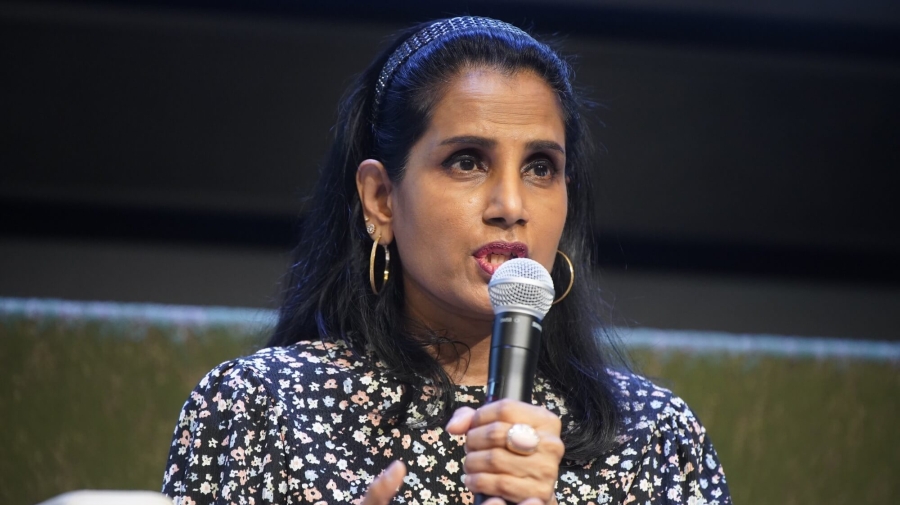
UNHCR Assistant High Commissioner for Protection, Ruvendrini Menikdiwela, delivers a Protection and Solutions Strategy update in a plenary session on the second day of the 2025 Consultations on Resettlement and Complementary Pathways.
After almost four decades serving forcibly displaced people and working alongside colleagues, governments, and partners around the world, my time with UNHCR is coming to an end.
I am leaving at a moment of profound uncertainty. The humanitarian sector is under growing pressure, and so are the principles that hold the international system together.
Significant reductions in funding have required difficult decisions, including the suspension or scaling back of programmes that are essential to the safety, well-being, and protection of millions of lives. Having seen firsthand the impact of these cuts, I know how critical these programmes have been in advancing protection and self-reliance. Behind every programme are people, families and communities whose safety, dignity and future depend on the protection and opportunities they provide.
While we have faced adversity in the past, the challenges we face today feel unprecedented not only because of the accelerated reduction in funding, but also because of more fundamental attacks on the very principles of refugee protection.
But I also know there are reasons to remain hopeful.
At a time when refugee protection is being increasingly challenged, the Global Compact on Refugees (GCR) shows what collective action, humanitarian diplomacy, and shared responsibility can achieve. For the last two and a half years as UNHCR’s Assistant High Commissioner for Protection, I have had the privilege of driving forward the GCR.
A decade ago, the New York Declaration for Refugees and Migrants was adopted by all UN Member States, an historic breakthrough for international solidarity that shifted our traditional way of working and ultimately led to the GCR and the Global Refugee Forum process. Since, the GCR has provided a blueprint for a new approach to humanitarian responses, bringing together diverse stakeholders to build longer-term solutions and integrate development work from the onset of crises.
Because of this collective effort, notable progress has been made across each of the four objectives of the Compact.
Support for refugee hosting countries, while still insufficient and uneven, is coming through new channels, broadening the base of support. For example, many hosting countries, frequently those most affected by and least responsible for climate change, are finally seeing support to tackle the effects of global warming and rising sea levels. The Government of South Sudan’s partnership with the World Bank has so far seen over 40,000 tree seedlings planted. This work is strengthening the protection, preparedness and resilience of refugees, other forcibly displaced and stateless people, and their host communities against climate impacts.
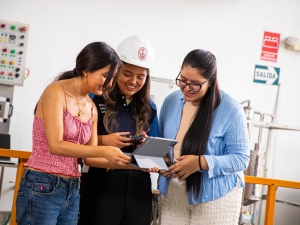
Refugee self-reliance is also on the rise, with displaced people having better access to education and employment opportunities. In 2019, only 3 per cent of refugee youth were enrolled in higher education programmes; by the end of 2024, this had tripled to 9 per cent. Meanwhile, work is being done to increase the number of refugees in secure employment, including 50,000 refugees who found work through the Government of Mexico and partners’ employment scheme.
Support for third-country solutions is under strain, yet there are still reasons to be optimistic. Between 2019 and 2024, OECD countries and Brazil granted around 1.2 million family, education and work permits to people from eight nationalities, generating significant international protection needs, while new complementary pathways emerge, from education pathways in Australia to private sponsorship programmes in Brazil. Despite significantly reduced global quotas, 17 countries including Canada, Australia, New Zealand, Spain and others remain committed to resettlement.
And, as we saw last year in Syria, millions of forcibly displaced people are being supported in voluntarily returning home and rebuilding their lives and their countries in safety and in dignity. This has contributed to the 7 per cent reduction we have seen in the number of internally displaced people between 2024 and 2025, the first fall in numbers in a decade.
At the same time, we have supported numerous countries in eradicating statelessness, undoing decades of injustice and bringing millions of people back into the communities to which they belong, while others have strengthened their asylum systems to improve and accelerate outcomes, bringing more certainty and timelier resolutions for asylum seekers.
While all of this work is put under unprecedented pressures, I see clearly the immense support refugee protection still has across the international community.
In December 2025, we held the second Global Refugee Forum Progress Review and saw the dedication and optimism that the GCR represents in full force. The Governments of Syria and Germany came together, matching pledges to rebuild Syria and enable the safe return of its citizens, a sign of hope after decades of crisis, while Ireland committed a billion Euros over four years to tackle hunger and malnutrition.
I leave UNHCR with the comfort of knowing that your passion and dedication will continue to make a difference. I know that you will continue advocating for the Global Compact on Refugees and the principles of solidarity and responsibility sharing that it embodies. As preparations for GRF 2027 intensify, I count on you to renew the commitments to solidary and human rights that we hold so dear.
Over ten years, we have proven the value of international cooperation, and shown that a different way forward, grounded in human rights, is not only possible, but essential for a more just and equitable world. Although I will no longer serve in this role, I will continue to support these efforts and remain a steadfast champion of the GCR.