Reflections from Rome: A Personal Account of Interfaith and Parliamentary Dialogue
Reflections from Rome: A Personal Account of Interfaith and Parliamentary Dialogue
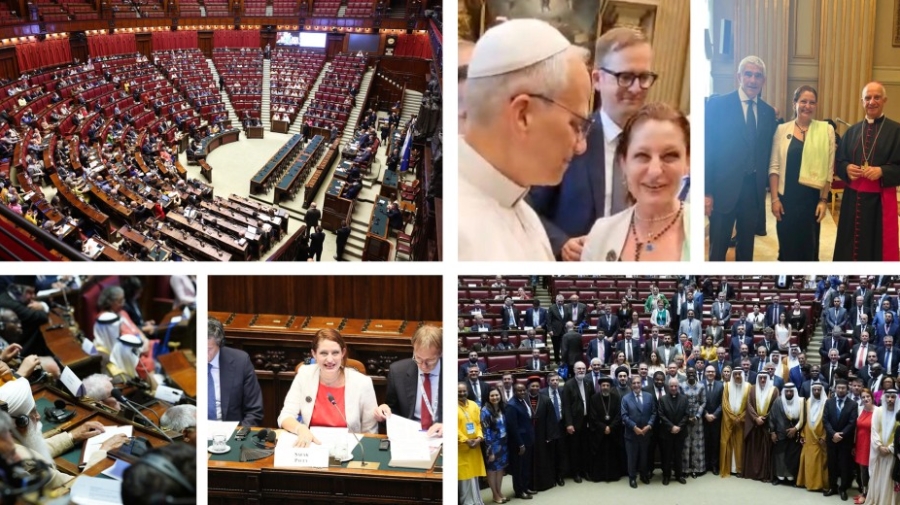
Şafak Pavey in Rome at the Second Parliamentary Conference on Interfaith Dialogue
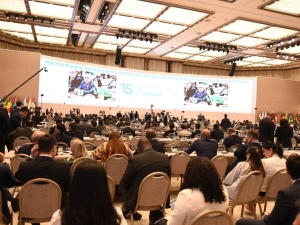
Standing among parliamentarians and religious leaders from nearly 100 countries at the Second Parliamentary Conference on Interfaith Dialogue in Rome, I felt a profound sense of unity. Marking World Refugee Day, this gathering — co-hosted by the Inter-Parliamentary Union, the Italian Parliament, and Religions for Peace — was more than a conference. It reflected a shared commitment to compassion.
As a long-time advocate for disability and women's rights, and now serving as Senior Advisor at UNHCR, I have consistently championed principles of impartiality, neutrality, and independence. In Rome, I witnessed the convergence of faith and politics in the service of peace.
As Mr. Claudio Cajado Sampaio of Brazil’s Federal Senate reminded us: "Religion and democracy do not exclude each other, but complement each other, precisely because both are based on the idea of respect for the other."
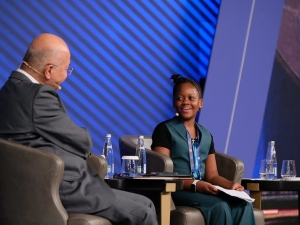
I had the opportunity to share my personal appreciation for the compassion and solidarity that filled the room. "It is a powerful reminder," I said, "that faith and politics, when guided by shared values, can build bridges to peace."
Other speakers echoed this sentiment. Ms. Aikaterini Notopoulou, Member of the Hellenic Parliament, reflected on the power of hope: "Hope, too, is a conscious choice. It means believing in shared futures even when the present seems fragmented. It is sustained by educators who teach respect, by religious leaders who build bridges, and by young people who choose unity over division."
Mr. Abdulla Isa Al Mannai, Executive Director of the King Hamad Global Centre for Coexistence and Tolerance, called the conference a turning point. "It supports the UN Resolution on Peacebuilding," he said. "Together we are building bridges of peace, not just between religions, but between people and nations." His words resonated, reinforcing the idea that coexistence is not merely a goal — it is a shared responsibility.
A part of the conference I deeply valued was the opportunity to be in the company of members of the Multi-Religious Council of Leaders, a council formed by Religions for Peace and UNHCR to support the implementation of the Global Compact on Refugees. These individuals brought not only theological wisdom, but also lived experience in conflict resolution, reconciliation, and community healing. Their contributions were grounded in a shared commitment to protect the dignity of those forced to flee. Dr. Francis Kuria Kagema reminded us that "all religious texts call us to welcome the stranger". I felt the strength of their collective moral leadership — one that transcended the many doctrines represented and spoke directly to what we share.
The Rome Communiqué, adopted at the close of the conference, condemned the misuse of religion to incite violence and called for inclusive, value-driven leadership. It reaffirmed our shared responsibility to protect the vulnerable and uphold human dignity. The communique was welcomed by our host, Mr. Pier Ferdinando Casini, Senator, Honorary President of the Inter-Parliamentary Union, and President of the Italian IPU Group.
One moment that stood out to me was when the steep public entryway posed a barrier to my participation. In a gesture of respect and inclusion, the Papal Office’s Swiss Guard offered me passage via the more accessible papal steps through the Holy Door, following the audience with His Holiness Pope Leo XIV. As I ascended those historic steps, I found myself in a place of tradition, yet one marked by the urgency of our present crises. Pope Leo XIV spoke of the moral imperative to protect the vulnerable within the context of his Jubilee of Governments, and he offered a blessing. His warmth and attentiveness reminded me that leadership, at its best, is rooted in humility and service.
As we look ahead to the Global Refugee Forum Progress Review 2025 and the Global Refugee Forum 2027, I carry with me the hope and momentum I felt in Rome. Peacebuilding must be actively pursued through every available avenue — especially in parliaments — where faith can serve as a powerful catalyst for dialogue and negotiation.
The path forward is clear. With faith and policy leaders united in purpose, we must walk it together— with solidarity, compassion, and the courage to act on behalf of those forced to flee.