How the Government of Egypt is working with partners to deliver on their pledges
How the Government of Egypt is working with partners to deliver on their pledges
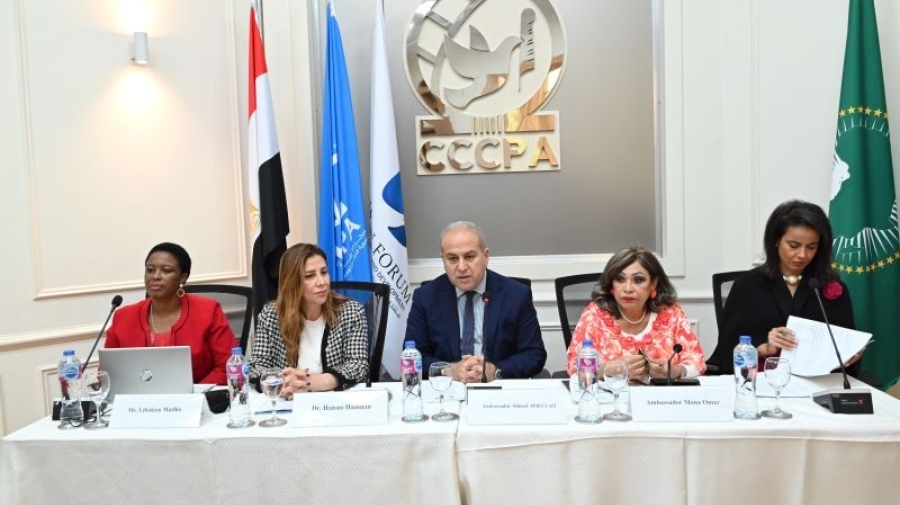
Fourth Post-Conflict Reconstruction and Development Awareness Week
At the Global Refugee Forum 2023, the Government of Egypt (GoE) submitted three pledges focusing on education, health, peacebuilding, and climate action. In addition, a further three pledges were submitted by the United Nations Country Team (UNCT) and a faith-based organization in Egypt, targeting key areas such as health, education, civil registration, data inclusion, and the provision of basic services to refugees and host communities.
Furthermore, fourteen pledges made by regional and global actors referenced Egypt, covering a wide range of thematic areas including education, health, peacebuilding, climate resilience, jobs and livelihoods, resettlement and complementary pathways, data inclusion, sports, registration, and basic services. These pledges reflect a strong international commitment to support Egypt’s efforts in hosting and integrating refugees and migrants.
Addressing the Impact of Climate Change on Displacement: Towards Sustained Peace in Africa
As part of its commitment to the Multi-stakeholder Pledge on Solutions, Peacebuilding and Conflict Prevention, the Government has emphasized the importance of addressing the root causes of displacement and promoting durable solutions through peacebuilding. This pledge is being operationalized through strategic partnerships, with the Cairo International Center for Conflict Resolution, Peacekeeping and Peacebuilding (CCCPA).
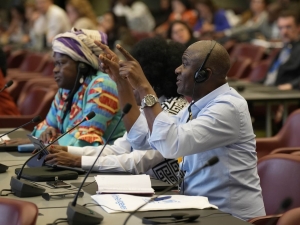
In collaboration with UNHCR Egypt, CCCPA is advancing this agenda by building national and regional capacity to address forced displacement in peacebuilding and post-conflict recovery contexts. A key milestone was the joint training held from 24 to 27 November 2024, titled “Integrating Forced Displacement in Peacebuilding and Post-Conflict Reconstruction and Development (PCRD) Efforts: Advancing the Humanitarian-Peace-Development Nexus (HDPN)”. This training brought together policymakers, experts, and practitioners to enhance knowledge and share best practices for addressing displacement in peacebuilding contexts. Additionally, CCCPA concluded its fourth Post-conflict Reconstruction and Development PCRD Awareness Week with a roundtable on “Operationalizing the Women and Gender Pillar of the African Union Policy on PCRD”, co-hosted with UNHCR and the AU PCRD Center. The event spotlighted the intersection of gender, forced displacement, and peacebuilding, reinforcing Egypt’s leadership in integrating these dimensions into national and continental peacebuilding frameworks.
These initiatives demonstrate how Egypt’s GRF pledge on peacebuilding is being translated into concrete action, contributing to both national resilience and regional stability.
Aswan Forum: 2-3 July 2024
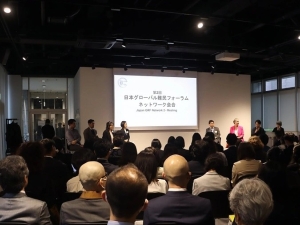
The Foreign Ministry of Egypt in cooperation with the CCCPA - the Executive Secretariat of the Aswan Forum for Sustainable Peace and Development - organized The Fourth Aswan Forum for Sustainable Peace and Development in July 2024. The Aswan Forum served as a key platform for advancing dialogue on the intersection of peacebuilding, climate resilience, and displacement. The Aswan Forum brought together high-level policymakers, regional organizations, and international partners to explore durable solutions to forced displacement in fragile and conflict-affected settings. The discussions reinforced the importance of integrating climate and displacement considerations into peacebuilding strategies, aligning closely with Egypt’s GRF pledges and UNHCR’s strategic priorities at the national and regional levels. In his intervention, Raouf Mazou, UNHCR’s Assistant High Commissioner for Operations, emphasized the urgent need for sustainable, long-term responses to the Sudan crisis, highlighting the importance of refugee inclusion, integrated settlements, and development financing. He praised host countries’ progressive policies and partnerships with institutions like the World Bank and AfDB. He stressed the role of socio-economic data, private sector innovation, and education investments — such as Vodafone’s INS program in Egypt — in building resilience. Mr. Mazou called for stronger international support to stabilize host communities and promote durable solutions.
The main conclusions from the Aswan Forum were:
- Reform Multilateralism, Global Governance Frameworks, including International Financial Institutions.
- Re-energize the Global Prevention and Sustaining Peace Agenda.
- Advance Holistic Approaches to Promote the Peace, Security and Development (PSD) Nexus.
- Advance the Common African Position (CAP) on Climate, Peace, and Security.
- Re-envision the Future of Peace Operations in Africa.
- Harness Youth’s Role in Scaling Up Innovative Pathways and Sustainable Solutions through Education to Build Peace.
- Revitalize Partnerships for Sustainable Peace and Development.
Donor Pledge by Netherlands: PROSPECTS Partnership
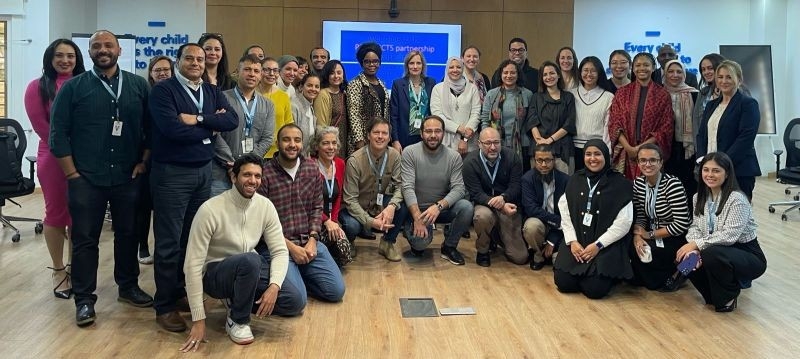
Launch of the second phase of PROSPECTS in Egypt
© ILO PROSPECTS
Egypt pledged to enhance the inclusion of refugees and asylum-seekers in national systems, particularly in the areas of education, health, and livelihoods. These pledges are being operationalized through the PROSPECTS partnership, a multi-annual initiative funded by the Dutch Ministry of Foreign Affairs and implemented by UNHCR, ILO, UNICEF, and the International Finance Corporation (IFC). The partnership aims to bridge humanitarian and development responses by supporting host governments in creating sustainable solutions for forcibly displaced populations.
In Egypt, PROSPECTS is actively addressing the challenges faced by refugees, focusing on improving access to education, employment, and social protection. For example, in 2024, UNHCR and the International Labor Organization (ILO) co-hosted a roundtable on the feasibility of including refugees in Egypt’s Universal Health Insurance (UHI) system, contributing to the GRF pledge on health inclusion.
In 2024, the second phase of PROSPECTS officially launched in Egypt, reinforcing the commitment of UN partners to improve the lives of both refugees and host communities. These efforts demonstrate how Egypt’s GRF pledges are being translated into tangible, inclusive, and sustainable actions through the PROSPECTS partnership.
Donor Pledge by the EU: Supporting a high-quality asylum space
The Joint Platform for Migrants and Refugees in the Arab Republic of Egypt is an initiative of the Government of Egypt and United Nations partners, that brings together Government, UN, development partners, donors and other stakeholders to strengthen these efforts to assist refugees, migrants and their host communities in Egypt.
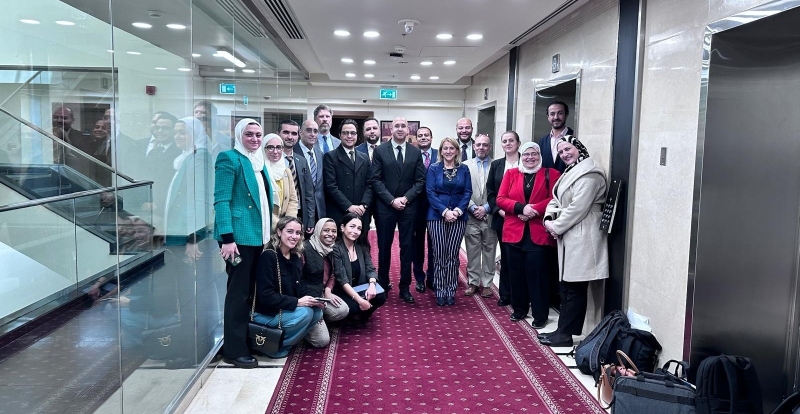
First technical coordination meeting of the Joint Program
© UN Egypt
The Platform aims to support the efforts of the Government of Egypt, with the international community, to assist migrants and refugees and build resilience among their host communities. It strives to ensure better delivery and mobilize resources to realize long term, sustainable development gains, enhancing social inclusion and cohesion.
The Joint UN Programme under the Joint Platform for Migrants and Refugees represents a major step forward in operationalizing the pledges to enhance the inclusion of refugees in health and education systems. Launched in September 2024, the €12.2 million programme is co-chaired by the Ministry of Foreign Affairs and the UN Resident Coordinator’s Office and is funded by the European Union. It brings together four UN agencies – UNHCR, IOM, UNICEF, and the World Health Organization – to strengthen national capacities and promote equitable access to essential services for refugees, asylum-seekers, and vulnerable migrants in Egypt. Also, on 6 March 2025, the first technical coordination meeting of the Joint Program was held to assess progress and establish mechanisms for effective implementation. The meeting brought together key stakeholders, including the Ministry of Health and Population and the Ministry of Education and Technical Education, and reaffirmed the Government of Egypt’s strong collaboration with UN partners.
Related content